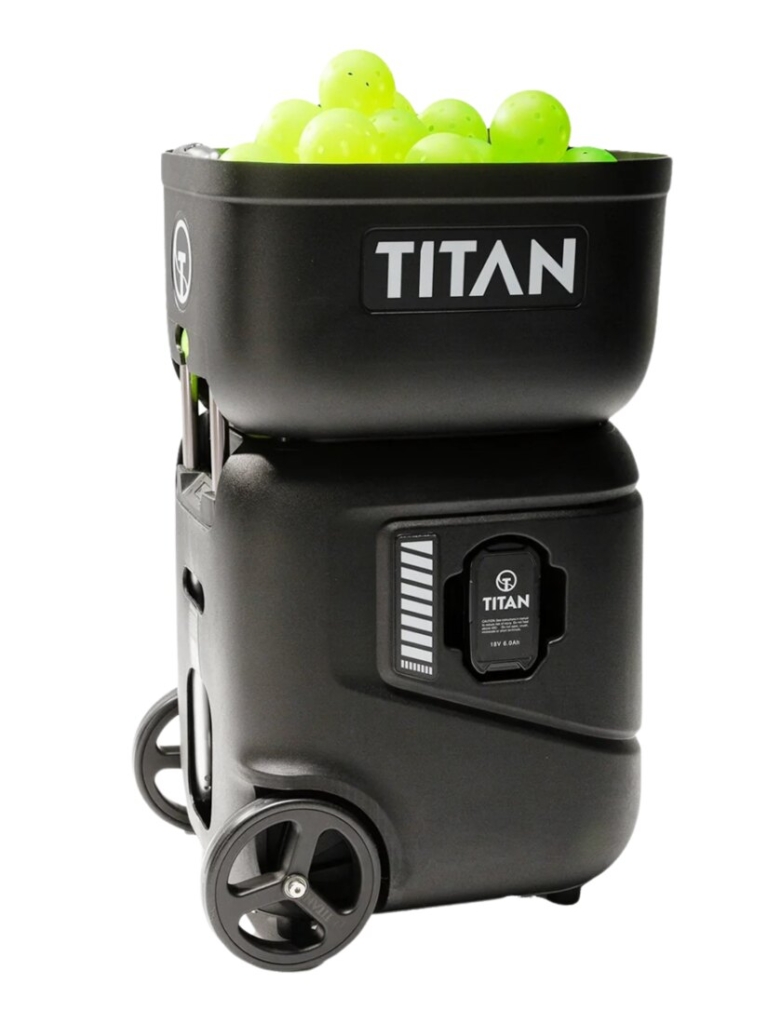
A ball machine is the most expensive piece of pickleball gear you can buy, and the one most people never think about until their game stops improving. Playing matches teaches you how to compete, but it does not give you the hundreds of repeated shots it takes to fix a backhand or tighten up your third-shot drop. A machine does, and it never gets tired, never complains and never feeds you the same shot twice if you do not want it to.
PickleballPH sells two Titan pickleball machines, the ACE at ₱151,900 and the ONE at ₱161,900, along with the batteries, remote, covers and ball hoppers that go with them. This guide explains the difference between them, what the accessories cost, and who should consider spending this kind of money. It is a research guide based on the listings, not a hands-on test, and the specs are Titan’s.
What a ball machine does for your game
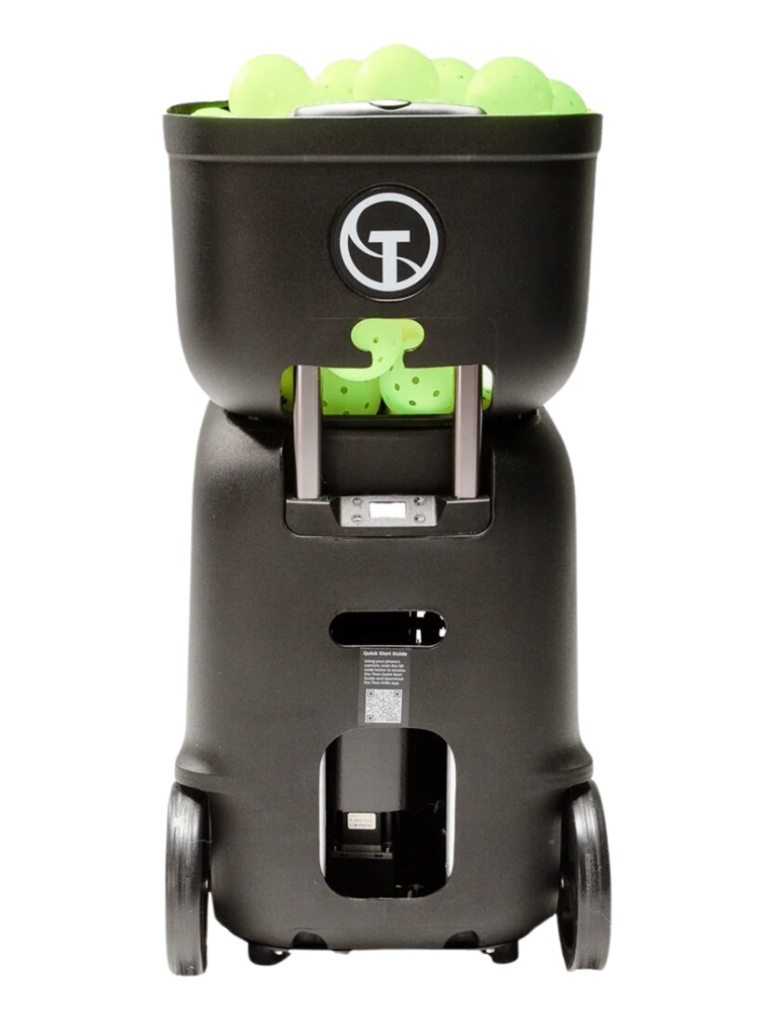
The honest case for a machine is repetition. A coach or a partner can feed you balls, but a human feeder tires after fifteen minutes and drifts from the target. A machine feeds at a set interval, from a set angle, at a set speed, and you can run the same drill fifty times in a row. That is how you build the muscle memory for a stable dink, a consistent drop or a reliable volley.
It is also useful for solo practice. If your partner cannot make the session, you can still get an hour of work in. The Titan machines include a free Titan Drills app with 12 pre-programmed pickleball drills, and a MegaDrill mode that Titan describes as the ultimate drilling experience, so you do not have to build a routine from scratch.
| Spec | Titan ACE | Titan ONE |
|---|---|---|
| Listed price | ₱151,900 | ₱161,900 |
| In stock | Yes | No |
| Ball capacity | 110 pickleballs | 85 pickleballs |
| Speed range | 10–70 mph | 10–70 mph |
| Weight (empty) | 39 lb | 48 lb |
| Weight (loaded) | 47 lb with 100 balls | 56 lb with 85 balls |
| Dimensions | 15 × 18 in, 21–30 in tall | 14 × 22 × 31 in |
| Battery | Lithium, about 2 hours | Lithium, about 2 hours |
| Special feature | Most compact | All-in-one storage in the hopper |
Prices are the peso prices listed at PickleballPH at the time of writing. The ACE was in stock and the ONE was not.
Titan ACE: the compact one
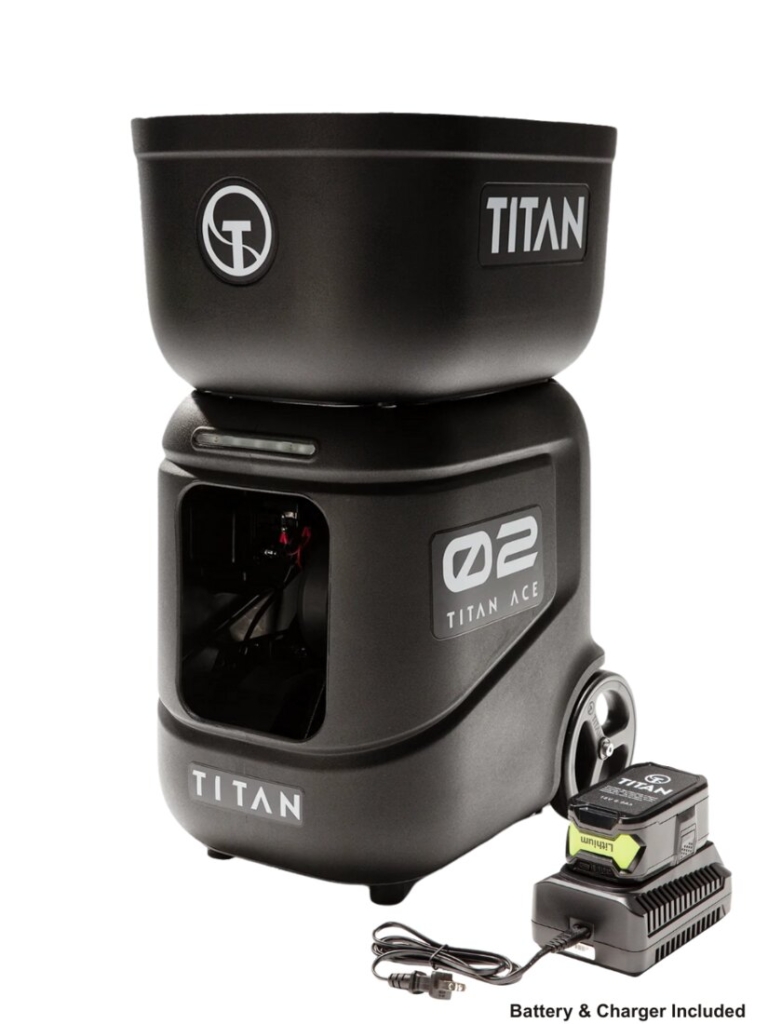
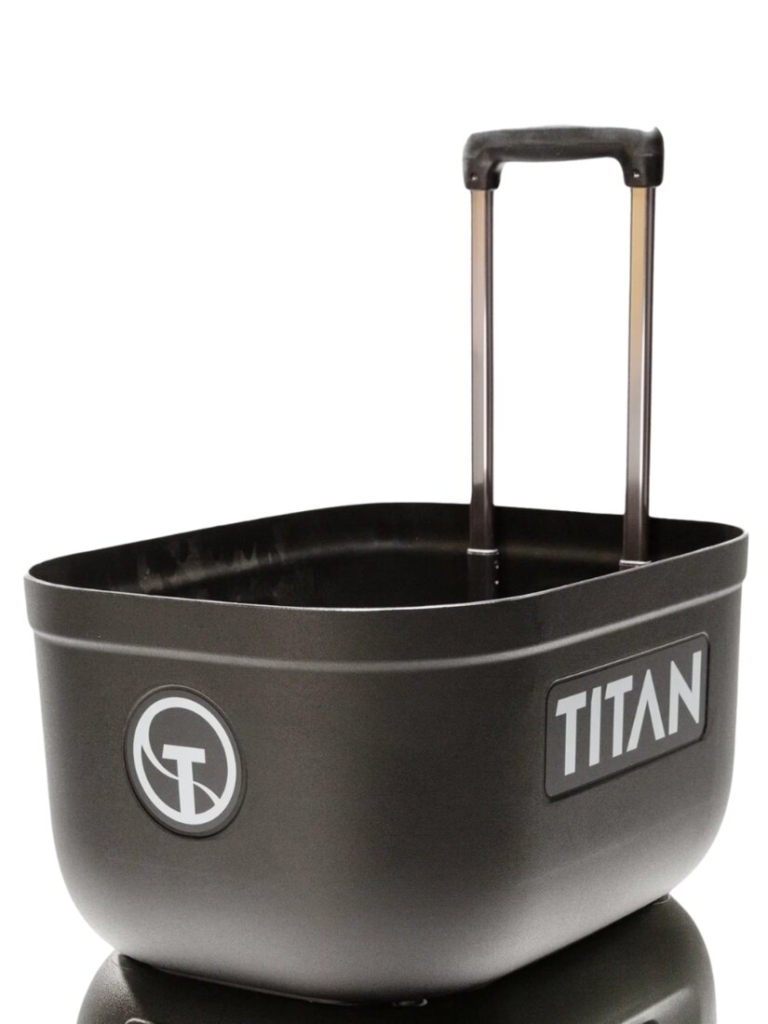
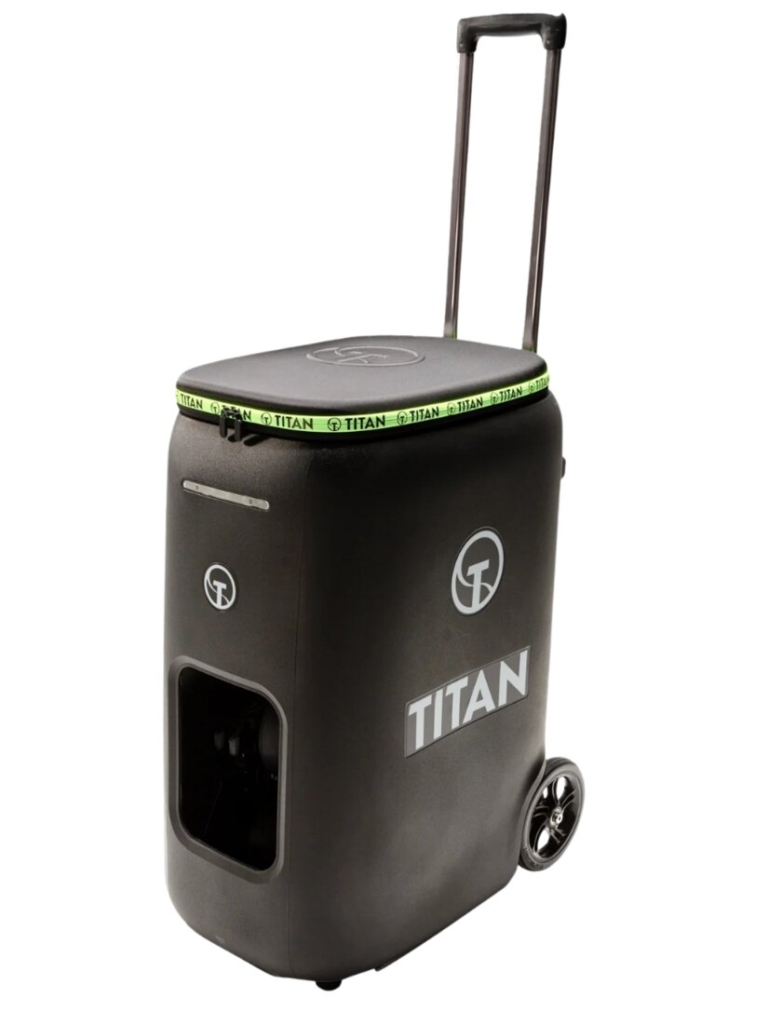
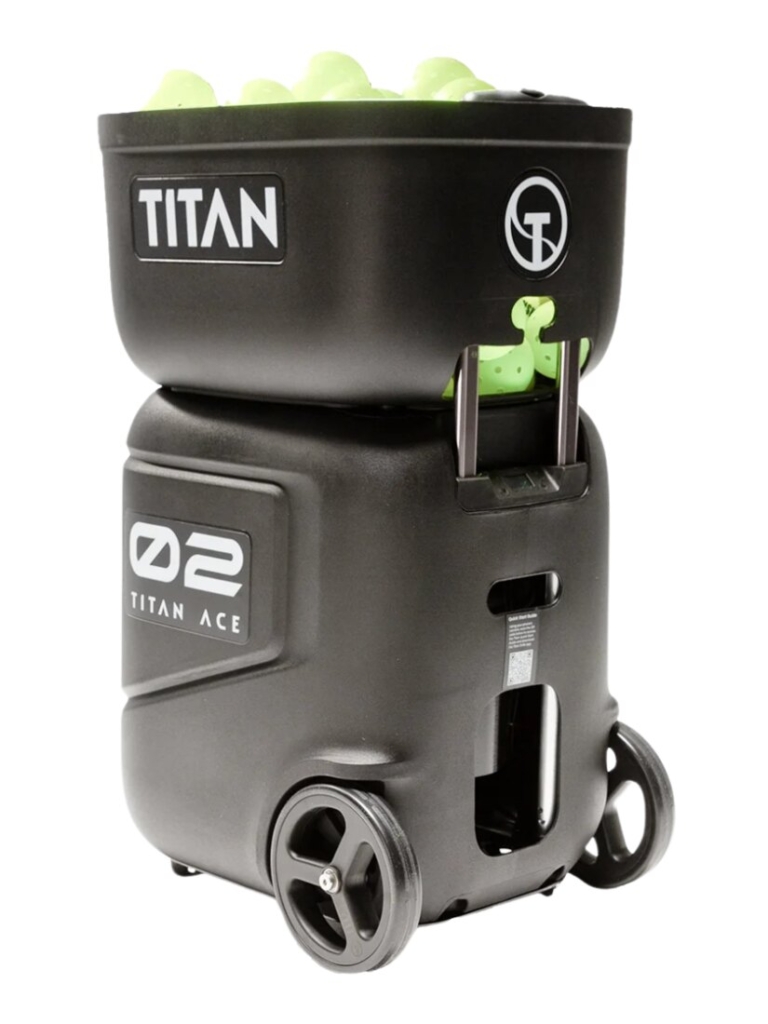
Titan calls the ACE its most compact machine, and it is the one that is in stock at ₱151,900. The hopper holds 110 pickleballs and the machine weighs 39 pounds empty, which makes it manageable for one person with the extendable handle and large trolley wheels. The hopper can be inverted for transport, and the machine stands 21 inches tall that way, or 30 inches with the hopper upright.
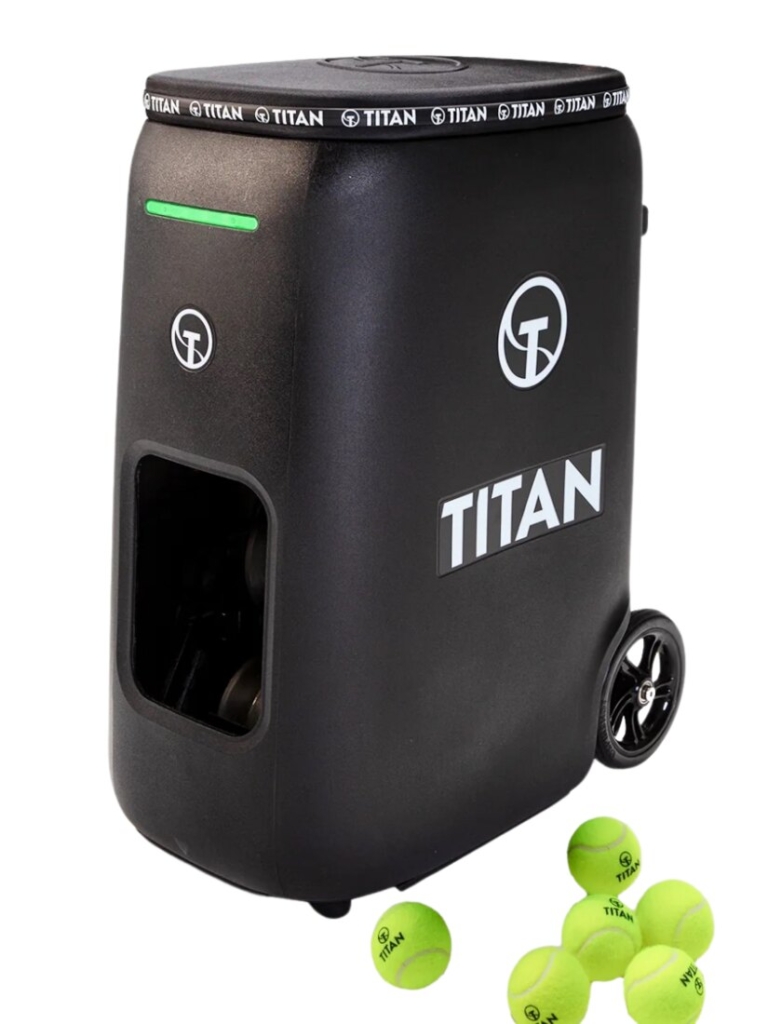
It throws balls at 10 to 70 miles per hour, with feeds from one to ten seconds apart and a maximum trajectory of 60 degrees. Internal oscillation moves only the motors inside the machine, so the exterior stays stationary while the ball delivery varies side to side, which Titan says gives an unpredictable, match-like delivery. An active braking system lets the motors speed up and slow down quickly between balls.
Titan ONE: the all-in-one
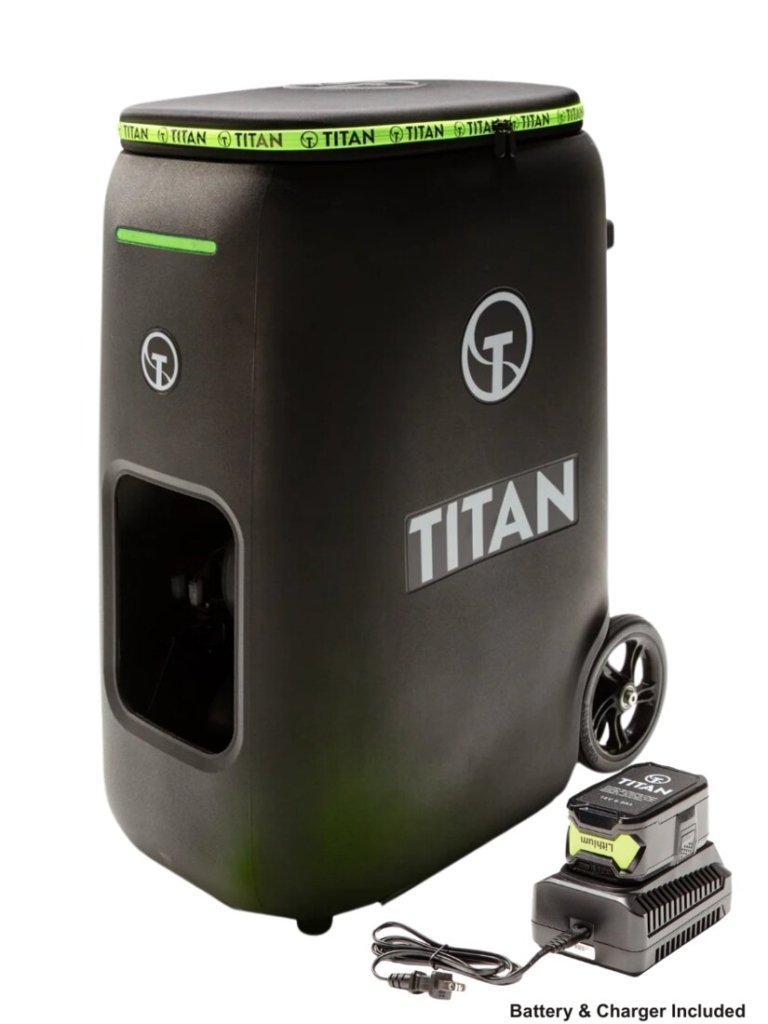
The ONE costs ₱10,000 more and holds fewer balls, at 85. What you pay for is the all-in-one design: you can store your paddle, balls and other kit inside the hopper, so the machine doubles as a carry case. It is bigger and heavier than the ACE, at 48 pounds empty and 56 pounds with 85 balls, and it stands 31 inches tall at 14 by 22 inches.
The speed range, feed range, trajectory, oscillation and battery are the same as the ACE. The ONE was showing as sold out. If you value convenience in transport and storage, it is the better design, and if you want more balls and a smaller footprint, the ACE is the one.
Accessories you will want
| Accessory | What it does | Listed price |
|---|---|---|
| Titan One Button Remote | Start and stop the ball feed with a long press, needs a CR2032 battery | ₱6,400 |
| Titan Lithium Battery | Spare battery, about 2 hours of play each | ₱7,500 |
| Titan Battery Charger | Spare or replacement charger | ₱4,500 |
| Titan ACE Ball Machine Cover | Custom fit, weather-resistant | ₱3,450 |
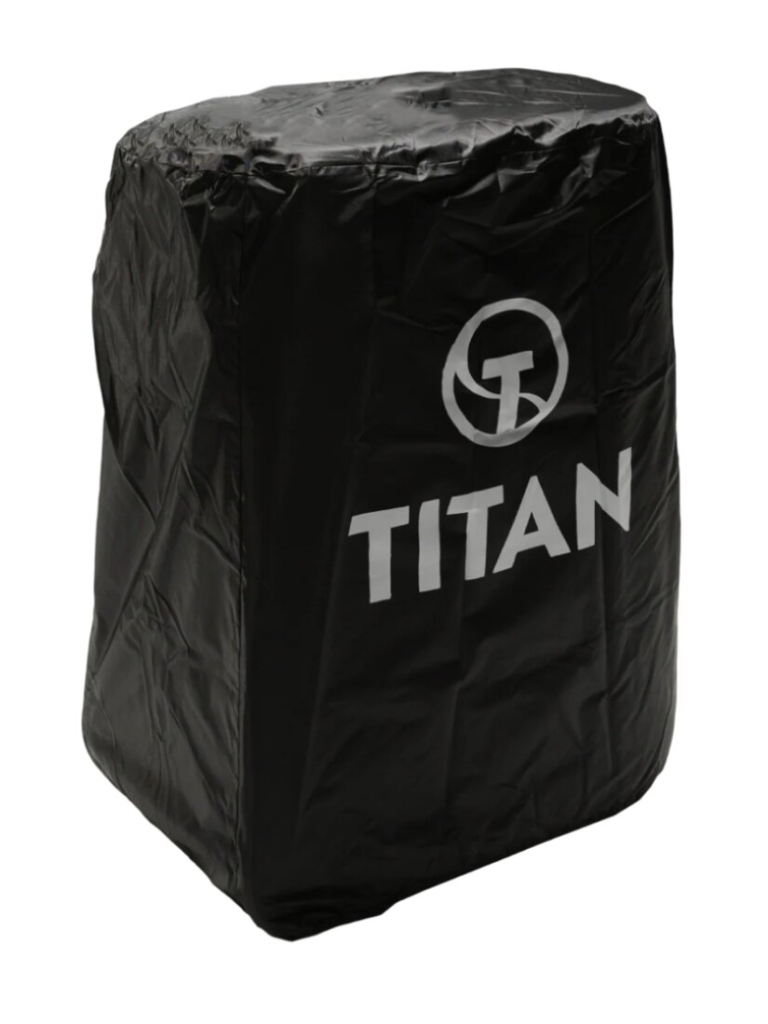
| Titan Waterproof Cover (ONE and ACE) | Waterproof, reinforced seams | ₱3,950 |
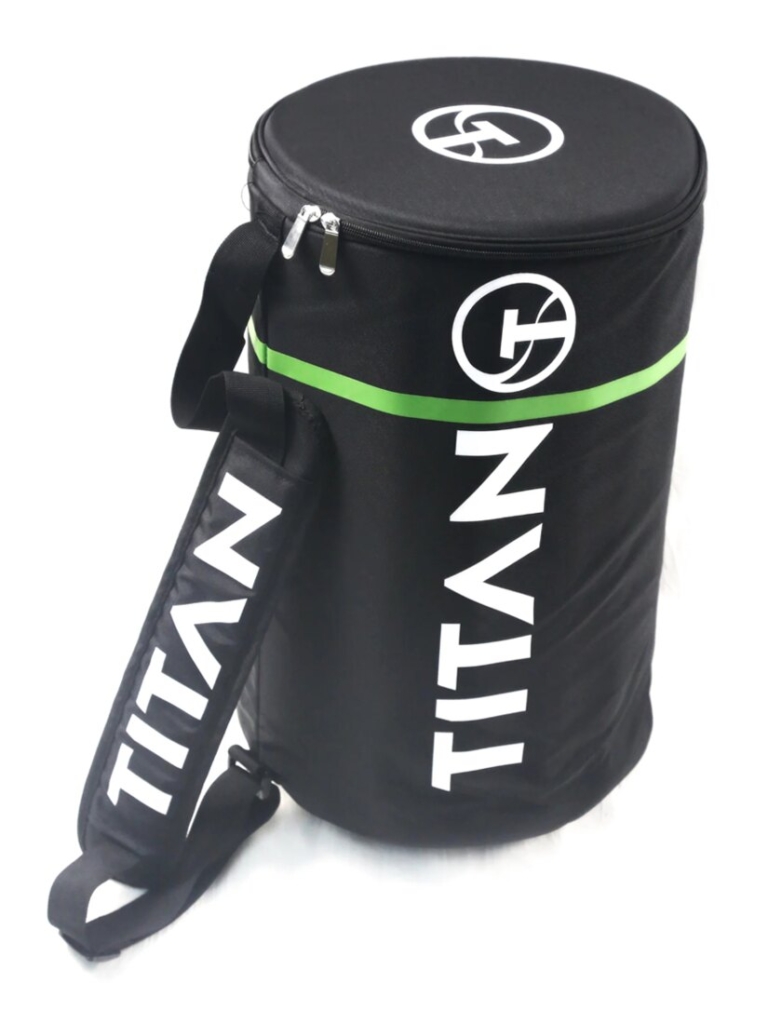
| Titan Ball Carry Bag | Holds 80 pickleballs, insulated | ₱5,450 |
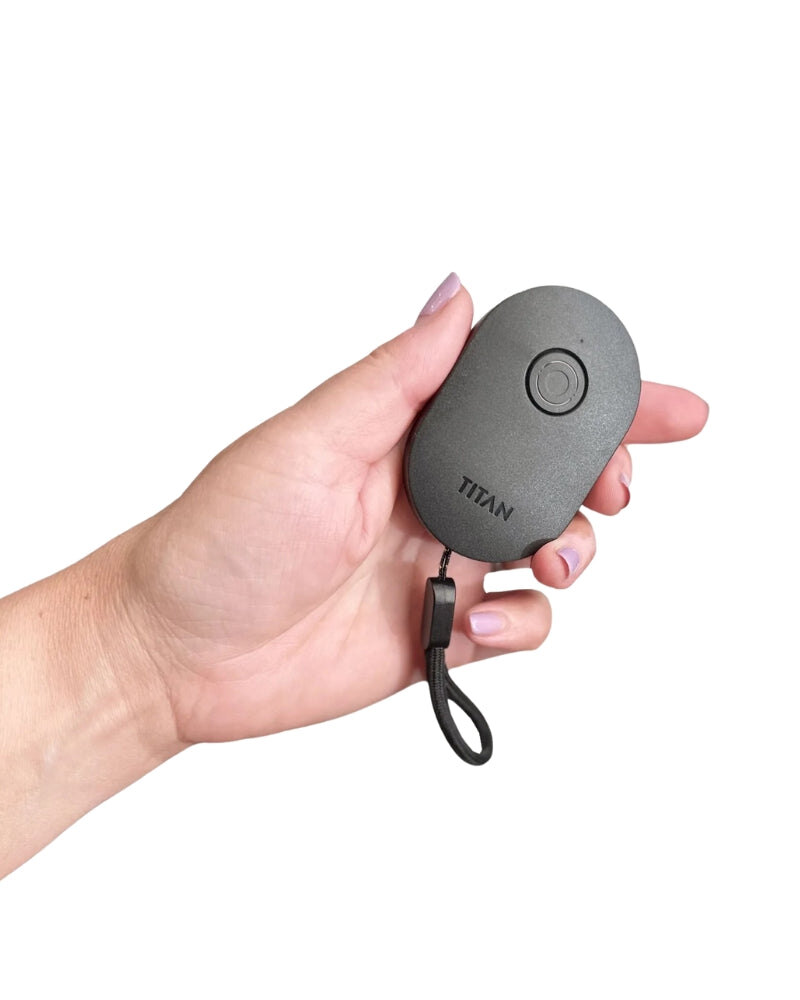
The remote at ₱6,400 is the accessory I would buy first. It lets you start and stop the ball feed with a long press, so you do not have to walk back to the machine every time you want to pause. Titan notes that the drill-switching function has been removed from the remote due to customer feedback, so it only starts and stops.
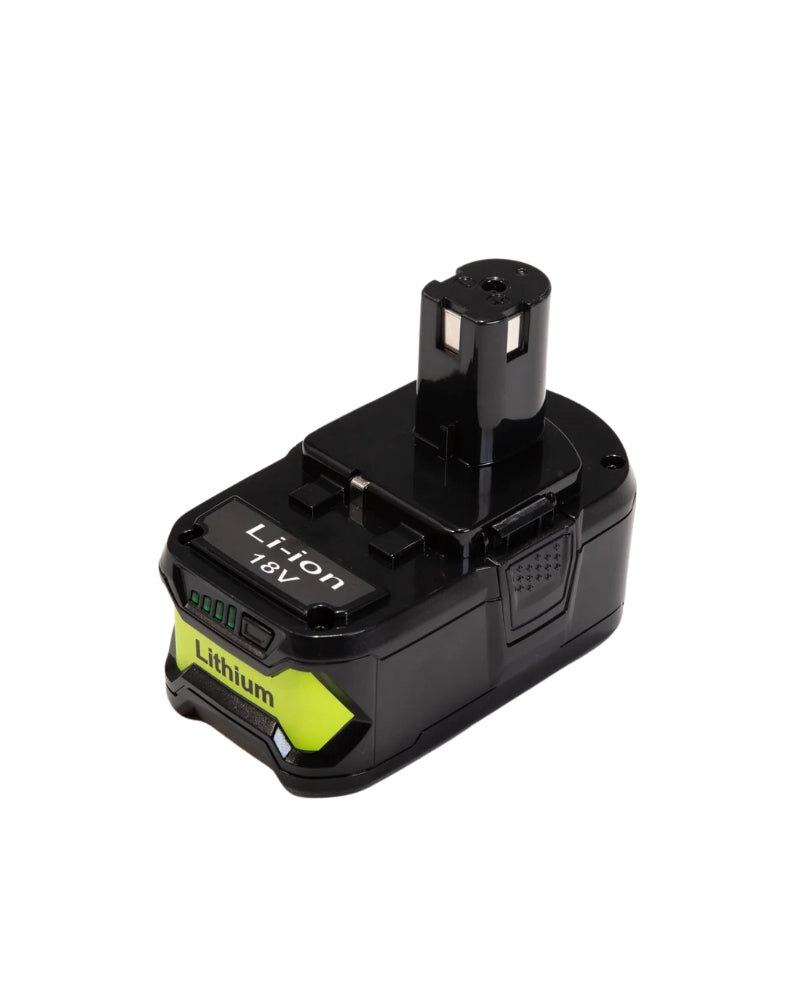
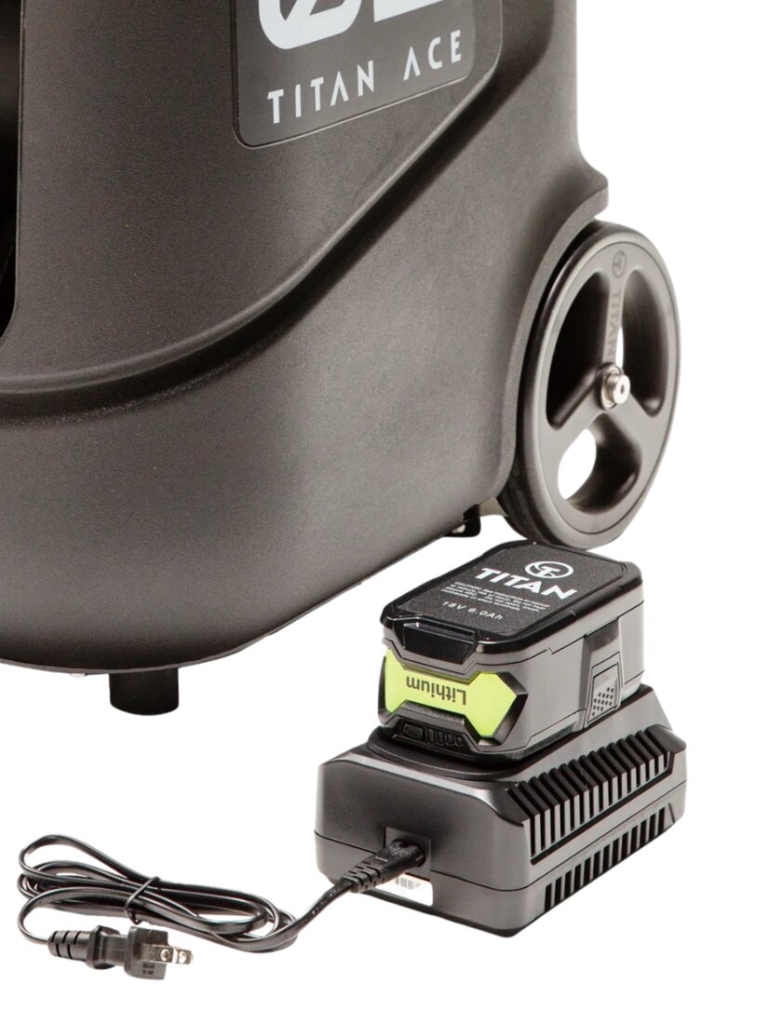
A spare battery at ₱7,500 doubles your session length to four hours, and the listing says the batteries have temperature control, overload control and discharge protection. Each battery comes partially charged and needs a full charge before first use. A machine comes with one battery and one charger, so you only need to buy a spare charger if you want a backup.
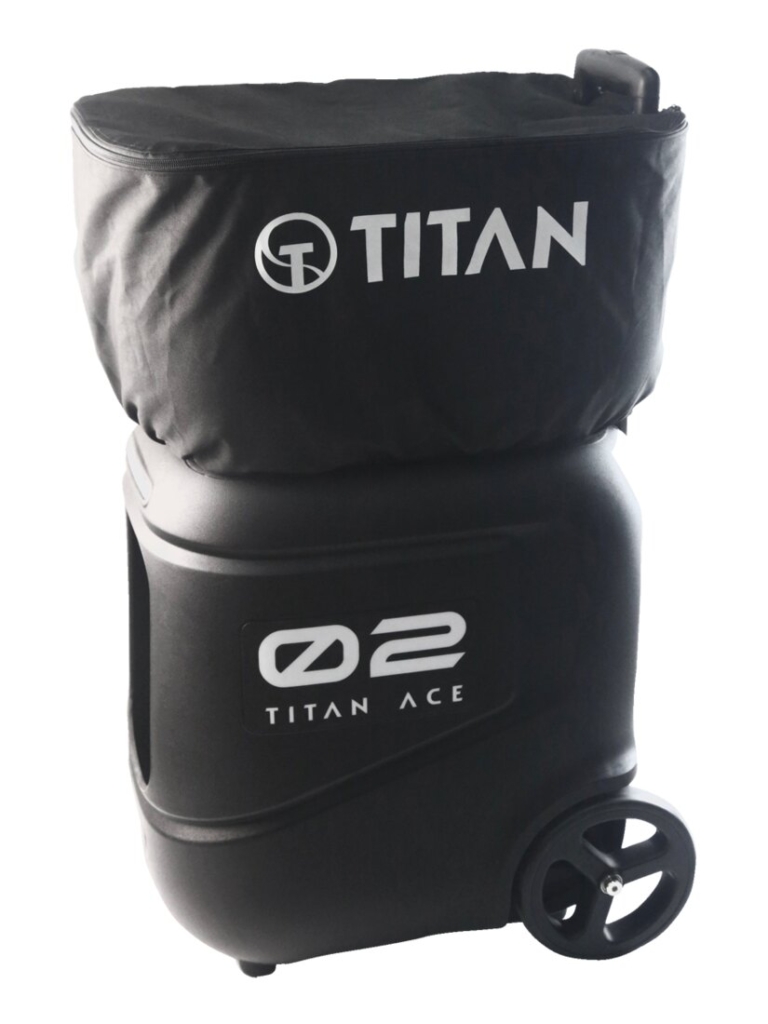
The covers are worth the money for a machine at this price. The ACE cover at ₱3,450 is custom fit and weather-resistant and fits whether or not the hopper is loaded. The waterproof cover at ₱3,950 fits both the ONE and the ACE and has reinforced seams. For best rain protection, Titan notes that fit depends on the hopper being in the installed position.
Ball hoppers and carry bags
A machine eats balls, and picking them up is the part of practice nobody likes. The Titan Ball Carry Bag at ₱5,450 holds 80 pickleballs or more than 120 tennis balls, has a padded, insulated lining that helps protect balls from heat, and doubles as a ball collector. A rigid double-wall design stops it collapsing when empty.
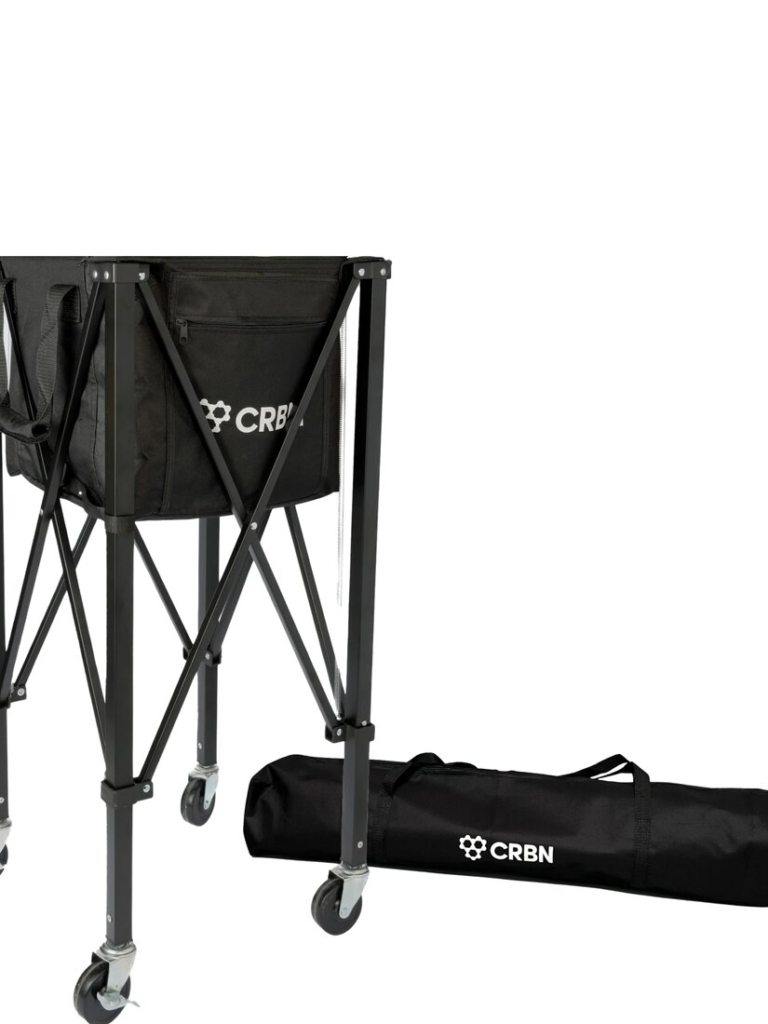
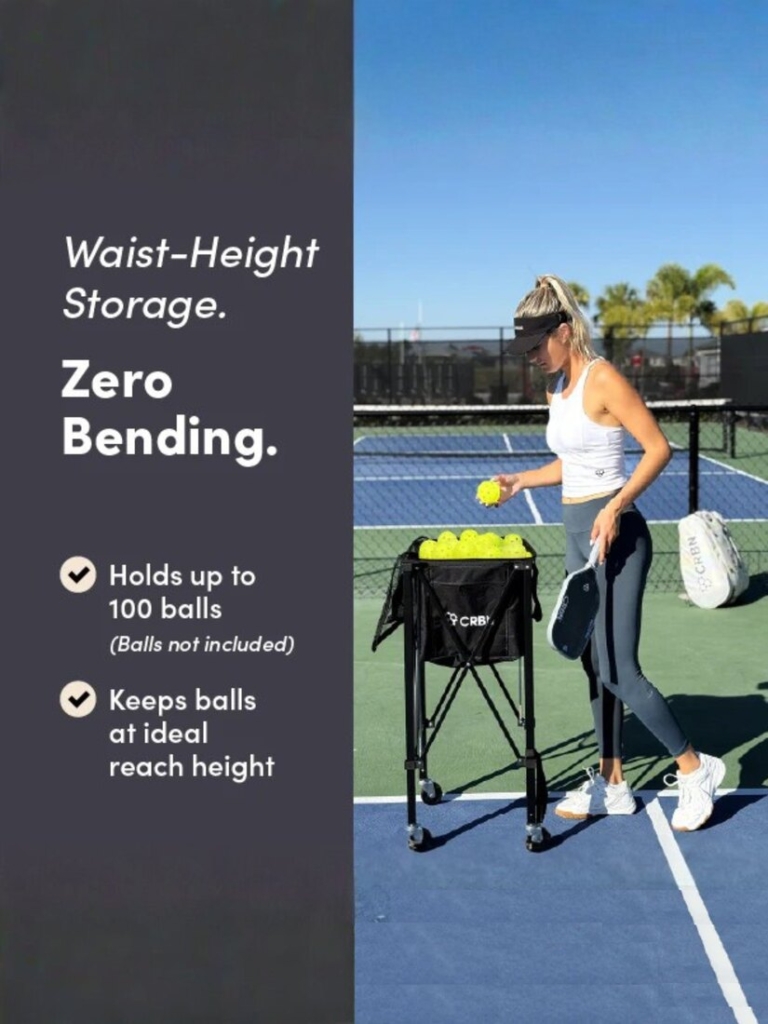
The CRBN Ball Hopper at ₱9,100 is the other option. It holds up to 100 pickleballs at waist height, so you do not have to bend over, and it has a built-in paddle sleeve, a zipper pocket and side pockets. It is light at 6.6 pounds, measures 16.3 by 16.3 by 36 inches and has 360-degree rotating caster wheels, with a fully collapsible frame and a detachable zip-close basket. It was out of stock.
What the full setup costs
Add it up and the real cost is higher than the sticker price. An ACE with a spare battery, a remote and a waterproof cover comes to ₱151,900 plus ₱7,500, ₱6,400 and ₱3,950, which totals ₱169,750. A hopper or carry bag adds another ₱5,000 to ₱9,000. That is a lot of money for one person, and it is the main reason most machines in the Philippines are owned by clubs, coaches and academies.
Splitting the cost makes it more reasonable. A group of ten players buying an ACE with a spare battery, remote and cover would pay about ₱17,000 each, which is less than the price of a premium paddle, and the machine can be used every day. A coach charging for lessons can add the machine to a practice package. If the cost-per-person is still too high, hiring a coach with a machine by the hour is an option.
Who should buy one
- Clubs and academies: the machine gets used every day, and the cost is shared.
- Coaches: it extends what you can offer in a lesson and takes strain off your arm.
- Serious solo players: if you train alone and have the budget, it is the best solo tool.
- Casual players: probably not. A ball hopper and a partner are enough.
If you are not sure, start with the practice net in my net guide and the balls in my bulk ball guide, and add the machine when you know you will use it every week.
Drills worth running
The machine has 12 pre-programmed drills, but you do not need a menu to get value from it. A few simple setups cover most of what improves a player’s game. Set the speed low and the feed slow, and hit crosscourt dinks to groove a soft touch. Raise the trajectory and work on overheads and lobs. Set a medium speed and practice returning from the baseline with a split step. Move your starting position back and forth between the baseline and the kitchen line to practice transitions, which is where many players lose points.
Because the delivery oscillates internally, you will get a spread of shots, and that spread trains your footwork as well as your hands. Start slowly, increase the difficulty only when you are consistent, and finish with a few minutes of free hitting so you do not leave the session with only one pattern in your head.
Machine or coach?
A machine is not a replacement for a coach. A coach sees what you are doing wrong and tells you how to fix it, and a machine only gives you the repetitions. The best use is both: take a lesson to learn the technique, then use the machine to drill it until it is automatic. If you can only afford one, a coach is usually the better first purchase, because practicing a flawed stroke a thousand times only makes it more permanent.
Questions to ask before you buy
- What does the warranty cover? Ask about the machine, the battery and the motors separately.
- Who services it locally? At this price, you want a plan for repairs.
- Does it ship with a battery and charger? The listings say yes, and a spare is extra.
- Is the pickleball version the one you are buying? Titan also sells tennis machines with similar names, so check the listing.
- Where will you store it? A machine of this size needs a dry spot, and a cover helps.
Looking after a ball machine
Charge the battery fully before each session and do not leave it to run flat. Store the machine indoors or under a cover, and keep the hopper free of cracked balls, which can jam the feed. Check the wheels and the handle before travel, and let the machine cool down after a long session. The batteries have protections built in, but heat is still the enemy of any lithium cell, so do not leave them in a hot car.
My picks
- Best to buy now: Titan ACE (₱151,900), because it is in stock.
- Best for transport: Titan ONE (₱161,900), if it returns.
- First accessory: the one-button remote (₱6,400).
- Best for balls: Titan Ball Carry Bag (₱5,450) or CRBN Ball Hopper (₱9,100).