If you want to play pickleball anywhere other than a public court, you need a net. That sounds simple until you look at the options. Some nets fold into a bag you can carry with one hand, some sit on wheels and weigh as much as a person, and some are small practice nets that only help you with dinks. They also range from under ₱4,000 to nearly ₱30,000.
This guide compares four nets sold in the Philippines through PickleballPH, covering a home practice net, a budget portable net, a travel-friendly regulation net and a heavy-duty club net. It is a research guide based on the product listings, not a hands-on test, and I have marked where a spec is the brand’s own.
What regulation means for a pickleball net
Before you shop, it helps to know the numbers. A regulation pickleball net is 22 feet wide, 36 inches high at the posts and 34 inches high in the center. The court is 20 feet by 44 feet, so a 22-foot net covers the full width of the court with room to spare. A net that does not hold those heights is fine for casual games, but if you want to practice for real play, or run a club or a tournament, you need one that does.
The two details that matter most in a portable net are how stable it is and how easily it sets up. A light net that blows over or sags in the middle will frustrate players, while a heavy net that takes an hour to assemble will stay in storage. Matching the net to where and how often you play is the real task.
| Net | Type | Listed price | Key spec |
|---|---|---|---|
| JOOLA Compact Practice Net | Practice | ₱3,950 | 5.5 ft wide, 36 in tall, magnetic base |
| PBPH Portable Pickleball Net | Portable | ₱5,950 | About 22 ft, 11 kg, caster wheels |
| JOOLA Symmetry Net | Portable, regulation | ₱22,000 | Under 28 lb, carrying bag |
| PBPH Heavy Duty Pro Net | Club | ₱29,500 | About 49 kg, six casters, hand crank |
Prices are the peso prices listed at PickleballPH at the time of writing. The JOOLA practice net was showing as sold out, so check stock before you plan around it.
JOOLA Compact Practice Net: for dinks at home
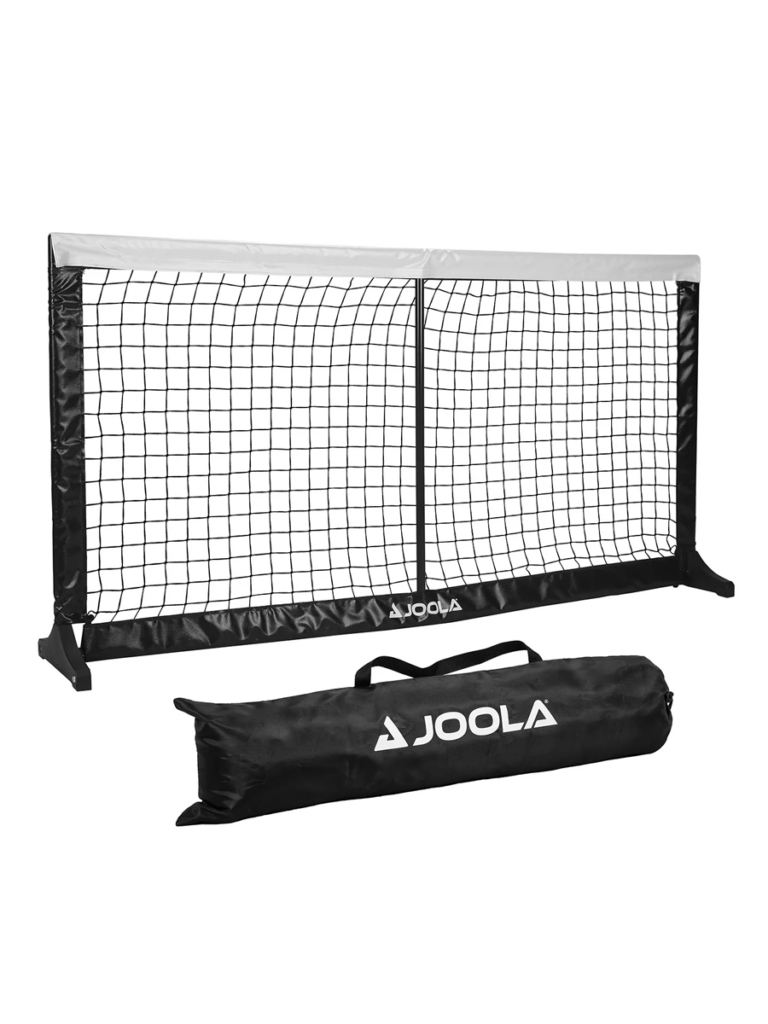
The JOOLA Compact Practice Net, listed at ₱3,950, is not a full court net. It measures 5.5 feet wide and 36 inches tall, which matches regulation height but only a fraction of the width. JOOLA says it is lightweight and portable and designed for quick setup at home, in a driveway or on the go. A built-in magnet at the base lets you connect multiple nets together for a bigger training area.
It is for solo practice and drills, especially dinks and short shots against a wall or with a partner, and not for a full game. If you want to practice at home without setting up a full net, it is a useful tool. The listing showed it as sold out, so you may have to wait or look at similar options.
PBPH Portable Pickleball Net: the budget full-size option
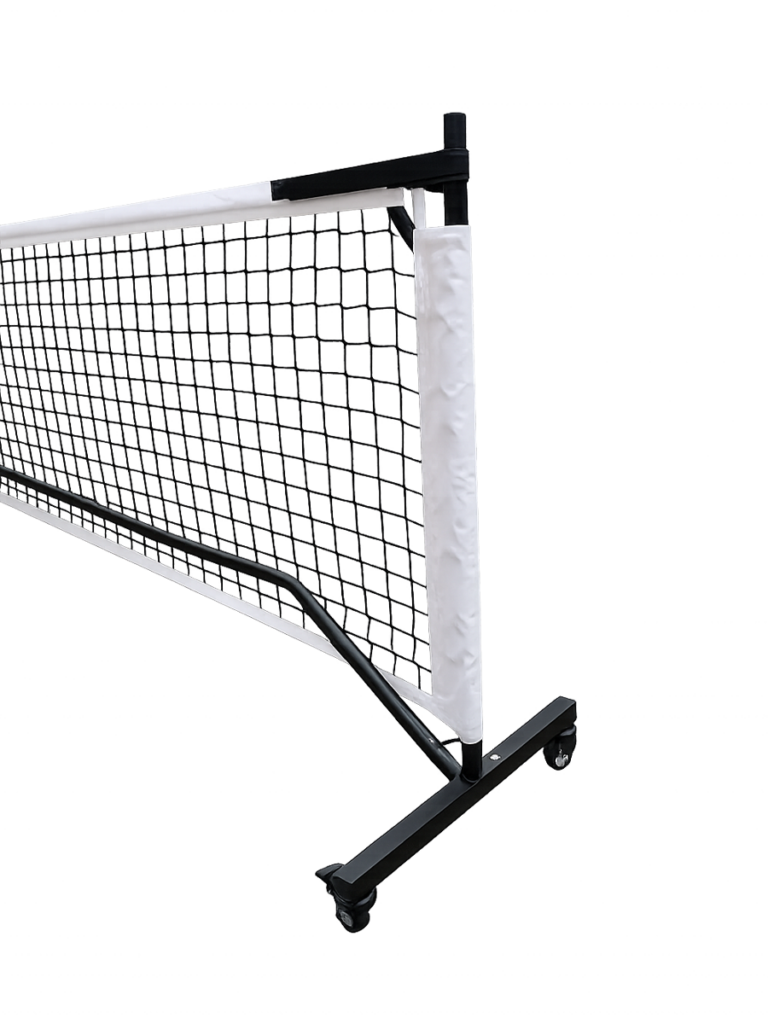
At ₱5,950, the PBPH Portable Pickleball Net is the cheapest way to get a full-width net. It has a freestanding metal frame on lockable swivel caster wheels, so you can roll it into position and lock it in place. It has an adjustable top tension strap, reinforced net binding and a center support bar for added stability, and it works indoors and outdoors.
The listing gives a weight of 11 kilograms and approximate dimensions of 22 feet long, with 36-inch posts and 34 inches in the middle. That is regulation, and 11 kilograms is light enough for one person to move. The trade-off is that a light net is less stable in the wind, so for outdoor use, check the base and weigh it down if needed.
For a school, a barangay court, a driveway or a gym where the net needs to go away after play, this is the practical choice. It is also cheap enough that you can try it without a big commitment.
JOOLA Symmetry Net: for players who travel
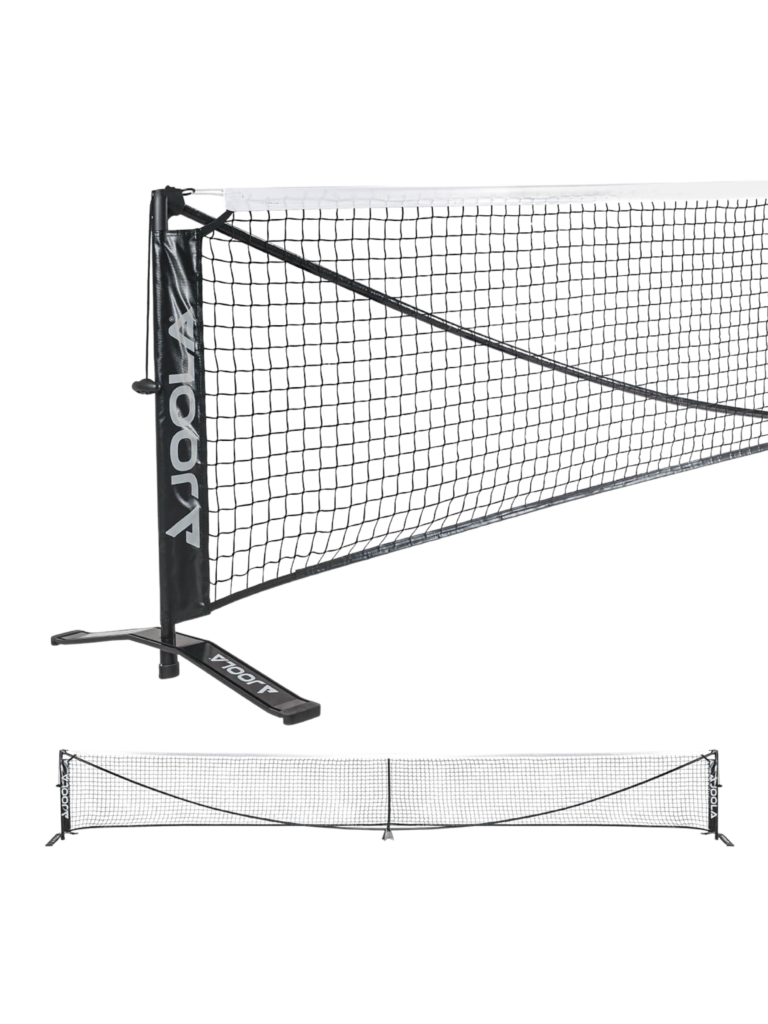
The JOOLA Symmetry Pickleball Net costs ₱22,000 and is built for players who want a regulation net they can pack up and move. JOOLA says it gives the steadfast feel of an in-ground net, with a tensioning system that sets accurate regulation height at both the sides and the center. It sets up in minutes using pre-connected support poles joined by durable shock cord, and a sturdy metal base keeps it stable during play.
It comes with a carrying bag, and the whole thing weighs under 28 pounds. The 2025 update added reinforced poles and connectors for better durability. For a club that needs to set up and take down every session, or for a player who travels to games, those features are what you pay for. It costs almost four times as much as the PBPH net, so it makes the most sense if you set up and pack away often.
PBPH Heavy Duty Pro Net: for clubs and tournaments
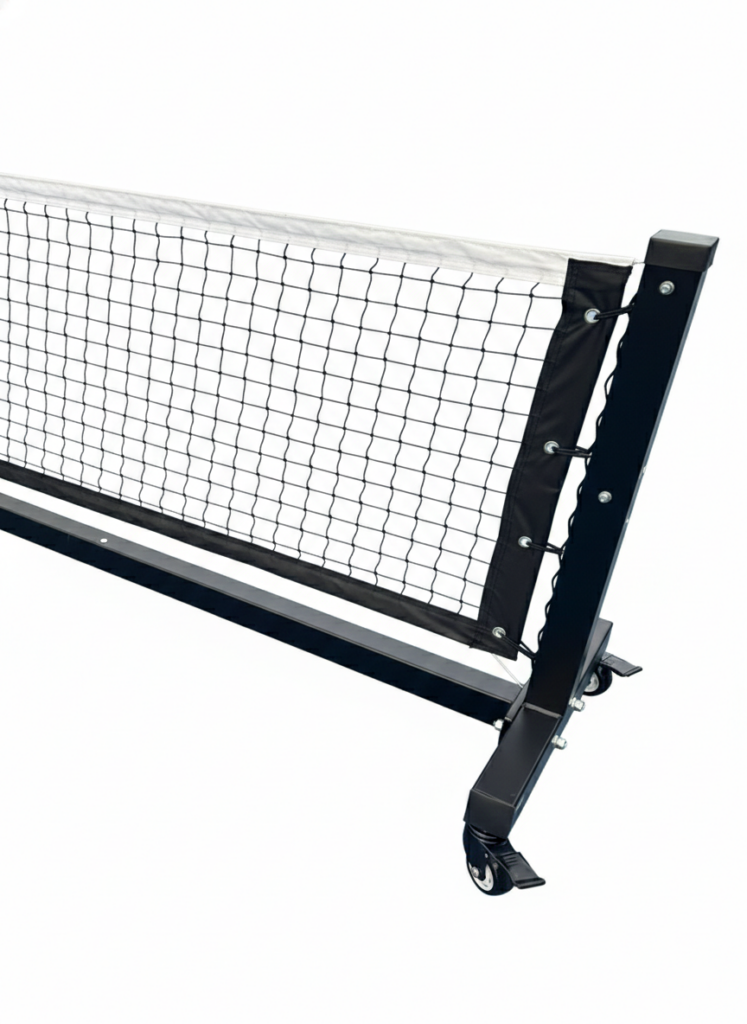
At ₱29,500, the PBPH Heavy Duty Pro Net is the most expensive and the most solid net here. It has a powder-coated steel frame to resist rust and weather, a heavy-duty polyester mesh net with a vinyl top strip, and a heavy-gauge steel cable tensioning system with a hand crank for precise height adjustment. The listing gives regulation dimensions of 22 feet wide and 36 inches at the sides and 34 inches in the center.
It weighs approximately 49 kilograms and rolls on six caster wheels, so it is stable but still movable. The listing says it is built for indoor gym floors and outdoor courts and for countless hours of play in outdoor conditions. For a club, a gym or an organizer that needs a permanent, dependable net, this is the one. For a casual player, it is far more net than you need.
Indoor or outdoor use
All three full-size nets here are listed for indoor and outdoor use, but the two settings put different demands on a net. Indoors, on a gym floor or a covered court, stability and the wheels matter most, because you may need to move the net around or store it between sessions. Outdoors, wind, sun and moisture are the problems, and a net that weighs more, with a powder-coated or rust-resistant frame, will last longer.
The PBPH Heavy Duty Pro Net is the one listed as weather-resistant for outdoor conditions, with a powder-coated frame. The lighter nets need more care outdoors, so keep them out of the rain and put them away at the end of play. In a humid climate, even a good frame can rust if it stays wet, so wipe it dry before storage.
Cost against how often you play
A net is a one-time purchase, but the right amount to spend depends on how much you will use it. If you play once or twice a month at a public court, you do not need to buy a net at all, and you can save your money for paddles and shoes. If you play at home or run a small group a few times a week, the PBPH Portable Net at ₱5,950 pays for itself quickly compared with court rental fees.
If you organize games for a club or school and you set up and take down the net every time, the JOOLA Symmetry’s quick setup and carrying bag save time. If the net stays in one place all the time, the heavy-duty option at ₱29,500 is a long-term investment, and it is the one that should last the longest. The cost per session drops quickly if many players use it.
Split the cost with a group if you can. A club of ten players could buy the heavy-duty net for ₱2,950 each, which is less than the price of a mid-range paddle, and everyone gets a better court.
How to choose
- Practice at home: JOOLA Compact Practice Net, if you can find it in stock.
- Casual games, tight budget: PBPH Portable Net.
- Regulation play you can carry: JOOLA Symmetry Net.
- A club or gym net that stays up: PBPH Heavy Duty Pro Net.
What you need to set up a court
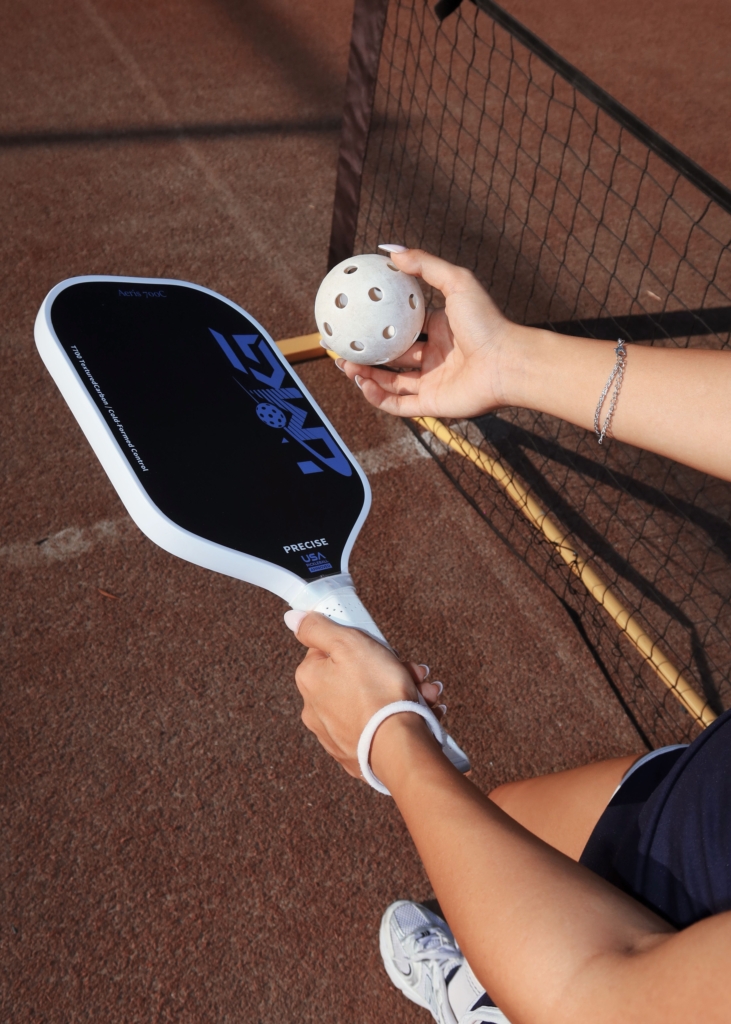
A net is only the start. A full pickleball court is 20 by 44 feet, with a non-volley zone of 7 feet on each side of the net, and you need to mark the lines. On a hard surface you can use removable court tape, which makes a temporary court quick to lay out. You also need space around the court, and a surface that is flat and not slippery.
- Space: Plan for about 30 by 60 feet for comfortable play around the court.
- Surface: A smooth, flat, hard surface works best, and avoid wet or uneven ground.
- Line markings: Use tape on a hard surface or chalk on grass if you only play occasionally.
- Balls and paddles: Bring more balls than you think you need, because they roll away.
- Lighting: If you play after dark, check whether the area has enough light.
Setting up and storing a portable net
Most portable nets are designed to be quick, but a few habits help. Assemble the net on a flat spot, tighten the tensioning system gradually and check the height at both the post and the center with a tape measure. The center is the one people forget, and a sagging net changes how the ball plays. When you are done, dry the net before you pack it, because a damp net grows mildew.
Store it in a dry place away from direct sun, and avoid stacking heavy things on the frame. Check the wheels and the tension strap for wear before each season, and replace anything that looks frayed.
Common mistakes
- Buying a practice net for games. A 5.5-foot net is for drills, not for a full court.
- Ignoring the wind. Light nets can move in a breeze, so weigh the base down or choose a heavier model.
- Forgetting the center height. The center should be 34 inches, not the same as the posts.
- Leaving it out in the rain. Even a rust-resistant frame lasts longer if you store it dry.
- Over-spending. A club net is not worth it if you only play on weekends.

My picks
- Best budget: PBPH Portable Pickleball Net (₱5,950).
- Best for travel: JOOLA Symmetry Net (₱22,000).
- Best for clubs: PBPH Heavy Duty Pro Net (₱29,500).
- Best for home practice: JOOLA Compact Practice Net (₱3,950), when it is in stock.
If you are setting up a court at home, you will also need paddles and balls. My guide to beginner paddles and my guide to pickleballs will help you choose both.