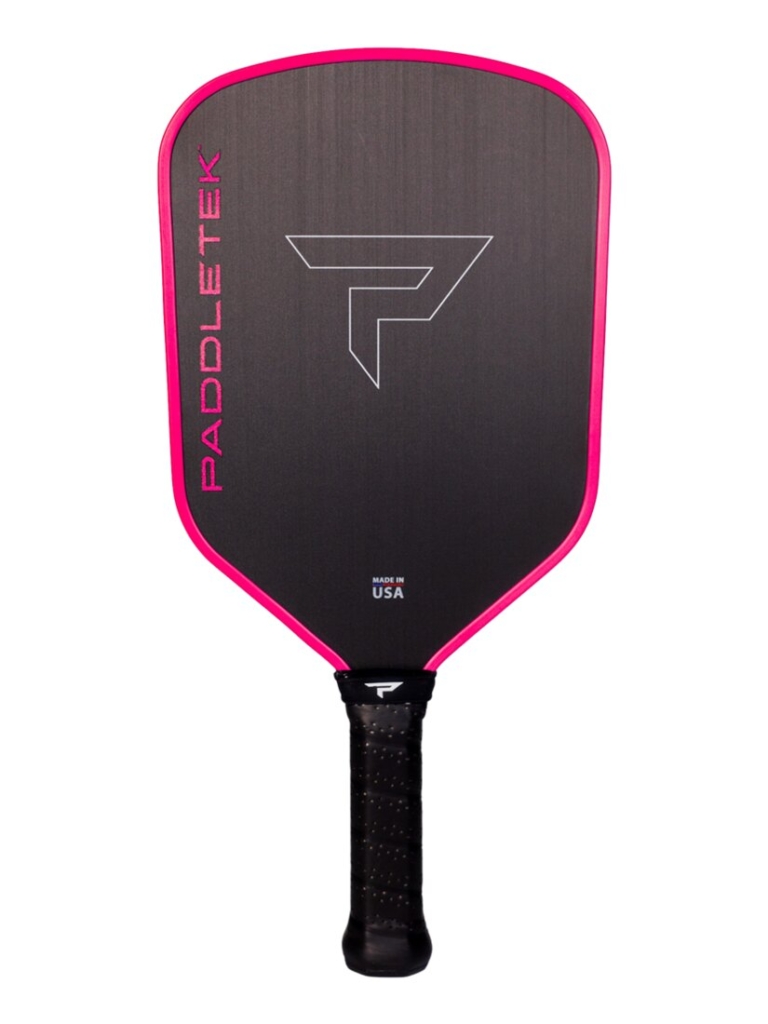
Paddletek is one of the older names in American pickleball, and its Bantam series is what the brand sells to competitive players. PickleballPH lists a lot of Bantam variants, almost all at ₱14,500, with a single Tempest Wave paddle at ₱12,200. They look alike at a glance, with black carbon faces and colored edge guards, and the names are a puzzle of letters: GTO-C, TKO-C, TKO-CX, ESQ-C, ALW-C.
This guide decodes six Paddletek paddles sold in the Philippines and explains how to choose between them. It is a research guide based on Paddletek’s own listings, not a hands-on test, and the ratings below are the brand’s own out-of-ten scores, not independent numbers.
What Bantam means
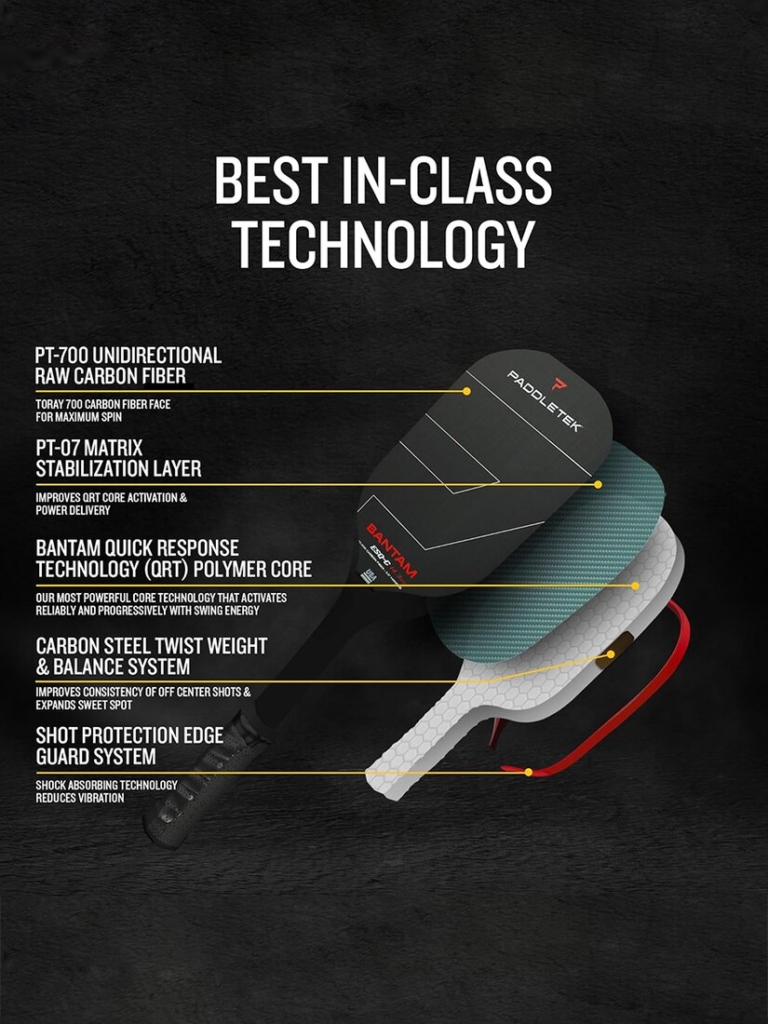
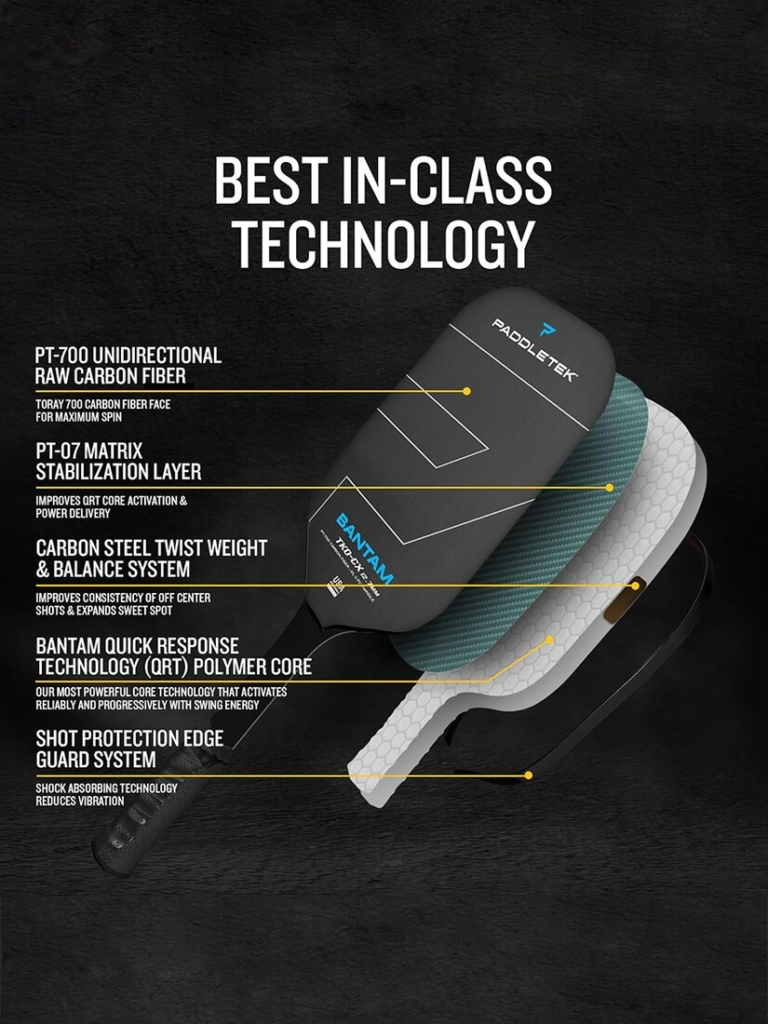
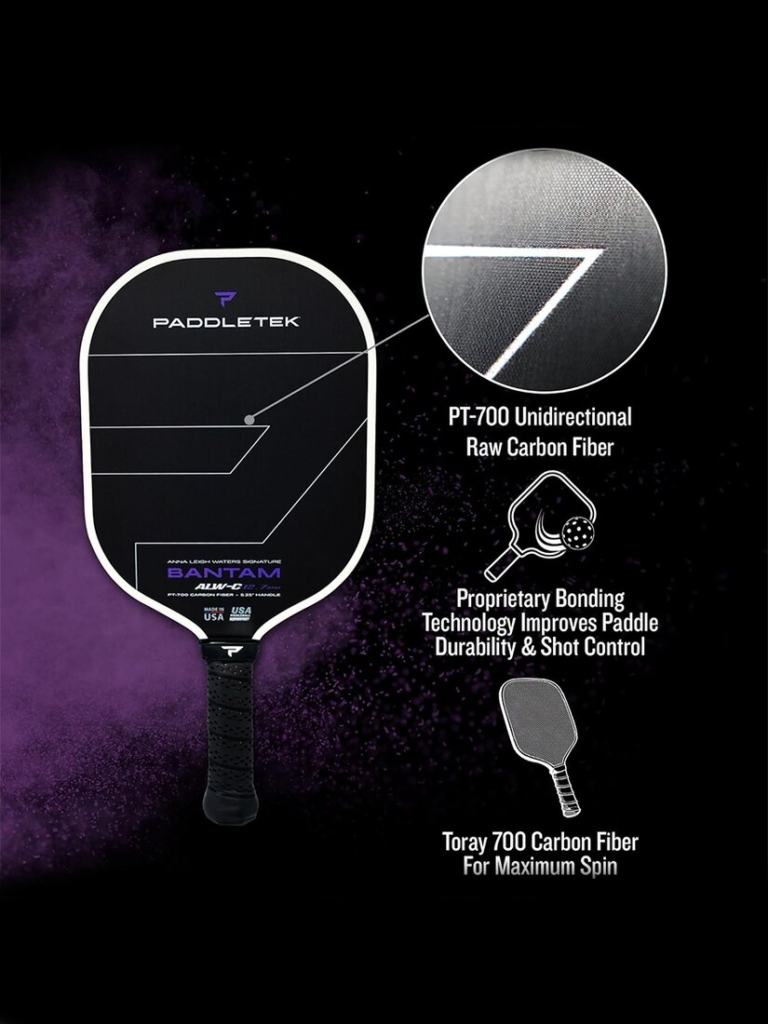
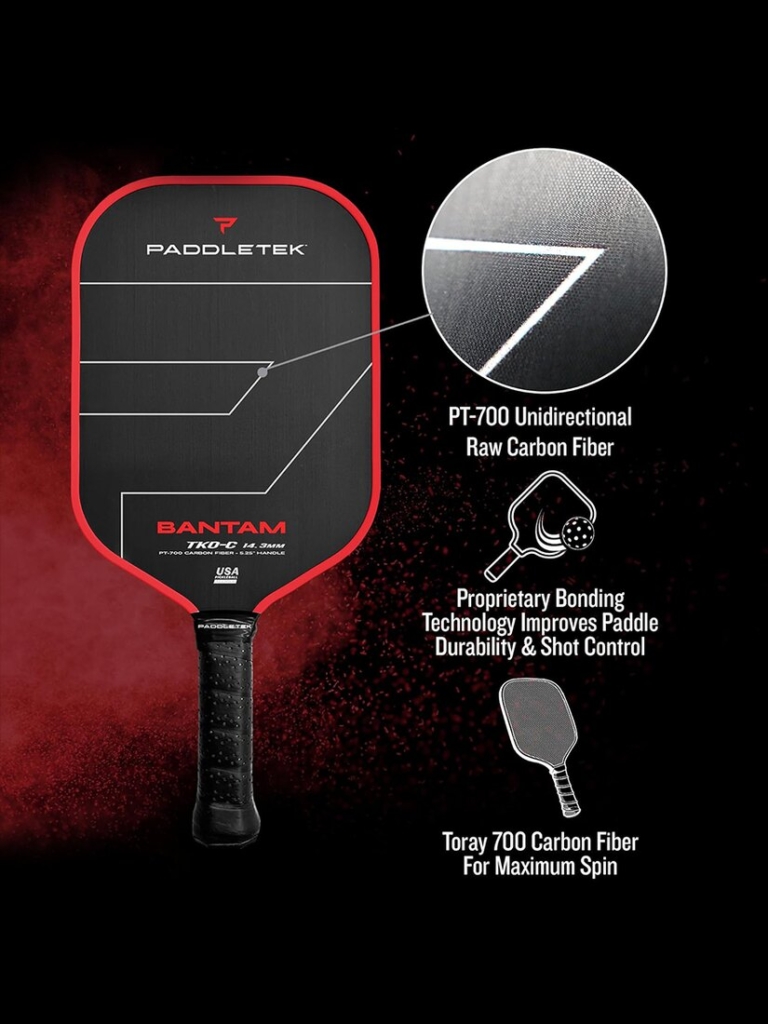
Every Bantam paddle shares a few features, according to the listings. The face is PT-700 unidirectional raw carbon fiber, which has a natural texture for spin. The core is an advanced polymer honeycomb that Paddletek calls its Bantam Quick Response Technology PolyCore, which is meant to convert swing energy into controlled power. There is a 1/8-inch shock guard edge system for protection and reduced vibration, and you can choose between a standard Ultra Cushion High Tack grip and a thinner High Tack grip.
The differences between the models come down to shape, handle length and core thickness. Paddletek rates each paddle out of ten for power, control and forgiveness, which is a handy way to compare them, as long as you remember it is the brand’s own scale.
| Paddle | Shape (L × W) | Handle | Core | Weight | P / C / F rating | Price |
|---|---|---|---|---|---|---|
| GTO-C | 16.25 × 7.75 in | 5.5 in | 12.7mm | 7.7–8.1 oz | 9.5 / 8 / 8 | ₱14,500 |
| TKO-CX | 16.5 × 7.5 in | 5.75 in | 12.7mm | 7.8–8.2 oz | 9 / 8.5 / 8.5 | ₱14,500 |
| TKO-C | 16.5 × 7.5 in | 5.25 in | 14.3mm | 7.8–8.2 oz | 9 / 9 / 9 | ₱14,500 |
| ESQ-C | 15.9 × 8 in | 5.5 in | 14.3mm | 7.6–7.9 oz | 8 / 8 / 9 | ₱14,500 |
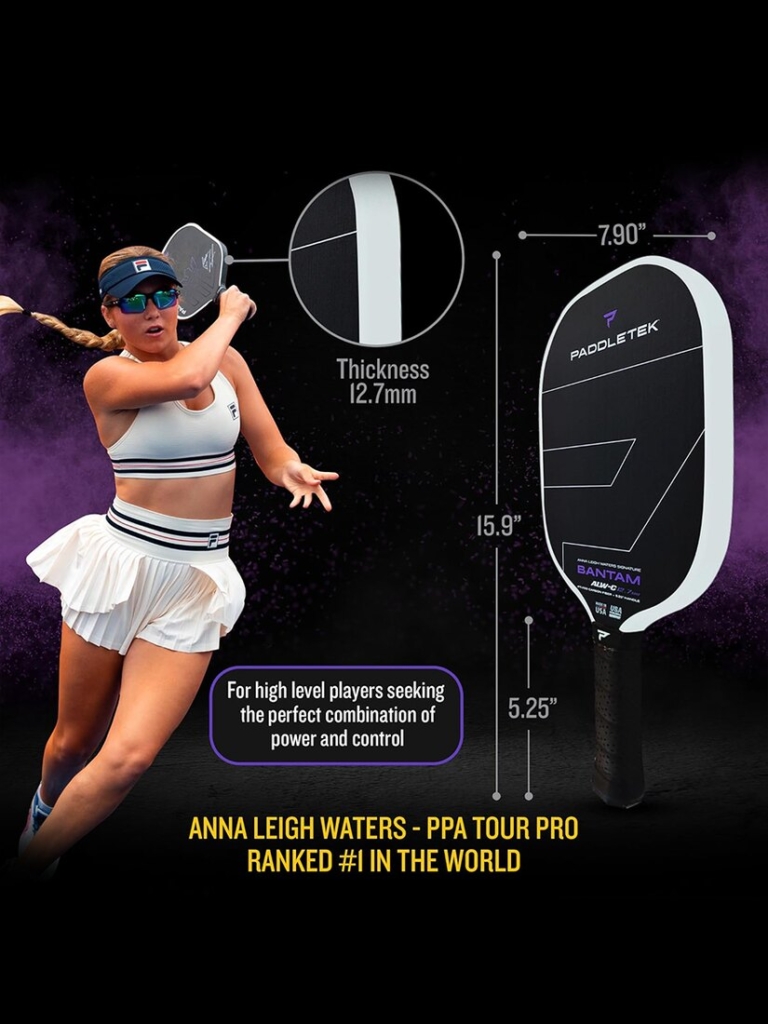
| ALW-C | 15.9 × 7.9 in | 5.25 in | 12.7mm | 7.5–7.8 oz | 9.5 / 7.5 / 7.5 | ₱14,500 |
| Tempest Wave Pro-C | 15.9 × 8 in | 5.25 in | 14.3mm | 7.8–8.2 oz | 8 / 9 / 9.5 | ₱12,200 |
P / C / F stands for power, control and forgiveness, as rated by Paddletek out of ten. Prices are the peso prices listed at PickleballPH at the time of writing. The GTO-C and ALW-C were in stock, and the others were showing as sold out.
Bantam GTO-C: the hybrid power paddle
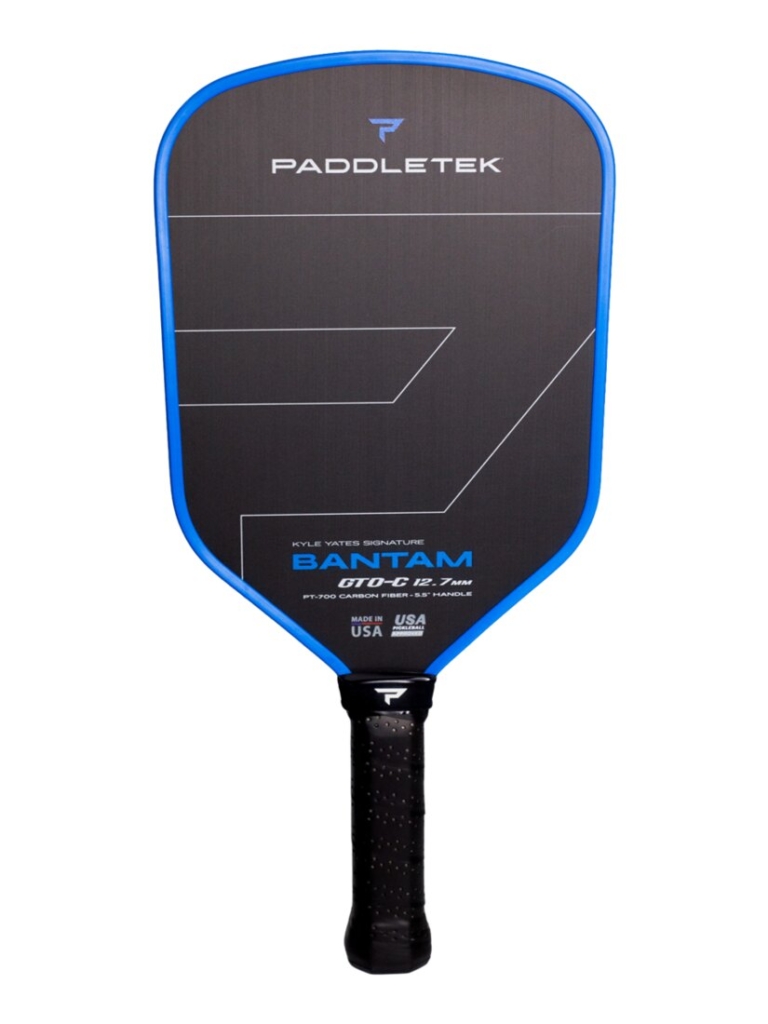
The GTO-C is built for players who push the pace with explosive drives while keeping reliable control. It has an aerodynamic hybrid shape at 16.25 by 7.75 inches, and Paddletek says the extended sweet spot provides high power with reliable forgiveness for aggressive play. The 12.7mm version has a power rating of 9.5, control of 8 and forgiveness of 8, and weighs 7.7 to 8.1 ounces.
A carbon steel balance and twist weight system is listed as expanding the sweet spot and improving off-center performance. It also comes in a 14.3mm version at the same price, which was in stock. If you want the most power in a paddle that is still forgiving, this is the one to start with.
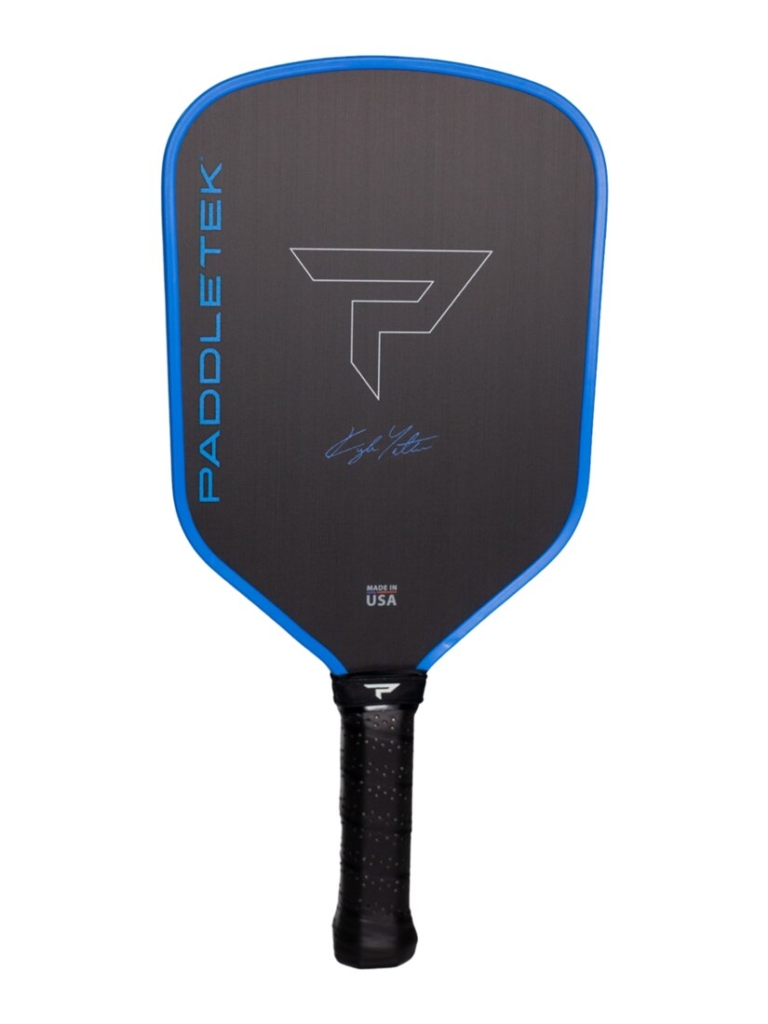
Bantam TKO-CX: the long-handle pro design
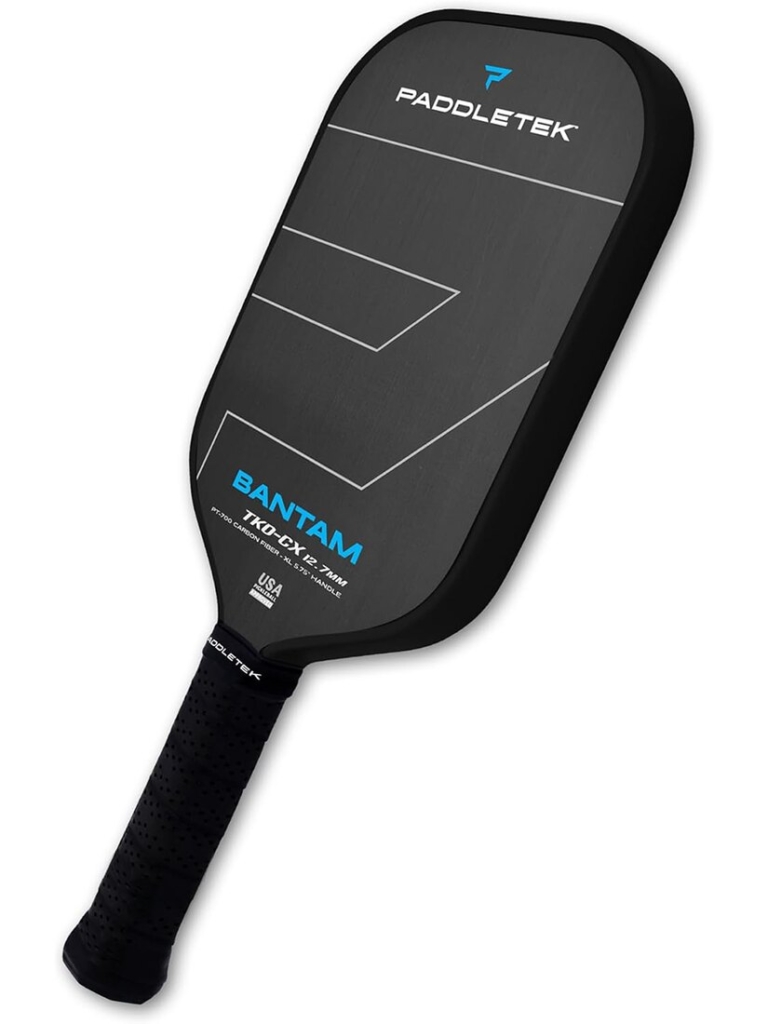
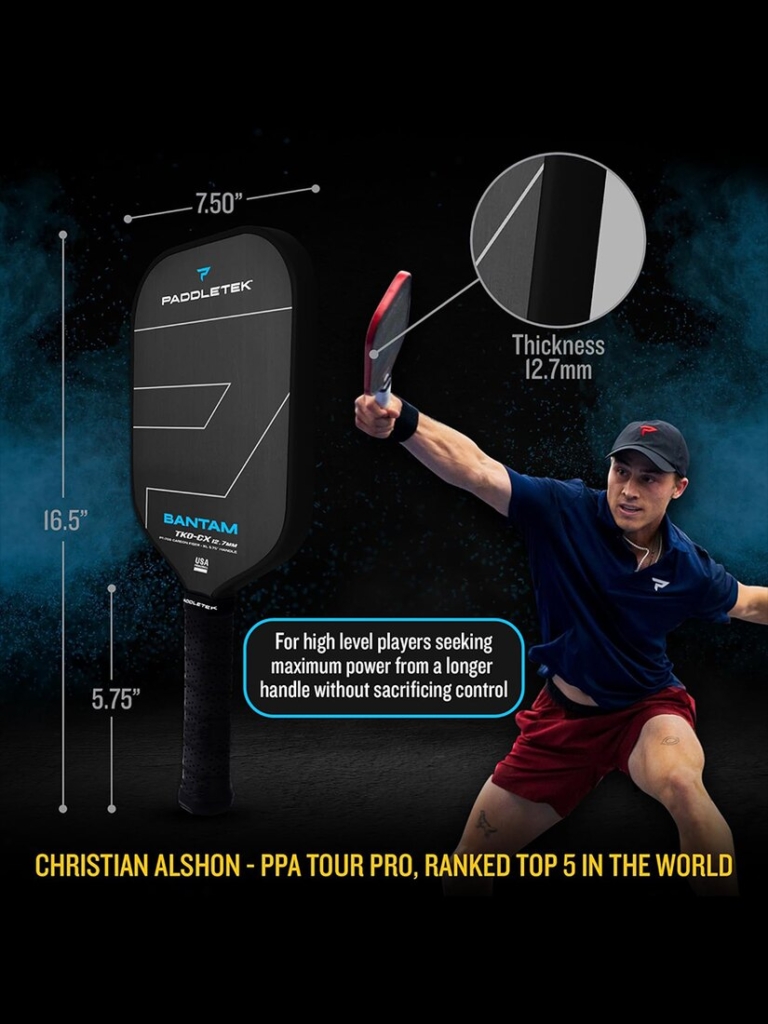
The TKO-CX was designed with pro player Christian Alshon and is billed as a blend of extended reach, two-handed versatility and maximum power. The XL 5.75-inch handle supports two-handed backhands and, according to the listing, reduces wind drag for quicker maneuverability. At 16.5 by 7.5 inches, it is the longest paddle in this guide, with a 12.7mm core.
It has ratings of 9 for power, 8.5 for control and 8.5 for forgiveness and weighs 7.8 to 8.2 ounces. It is a paddle for players who like to extend and attack, and it was out of stock when I checked.
Bantam TKO-C: control and spin
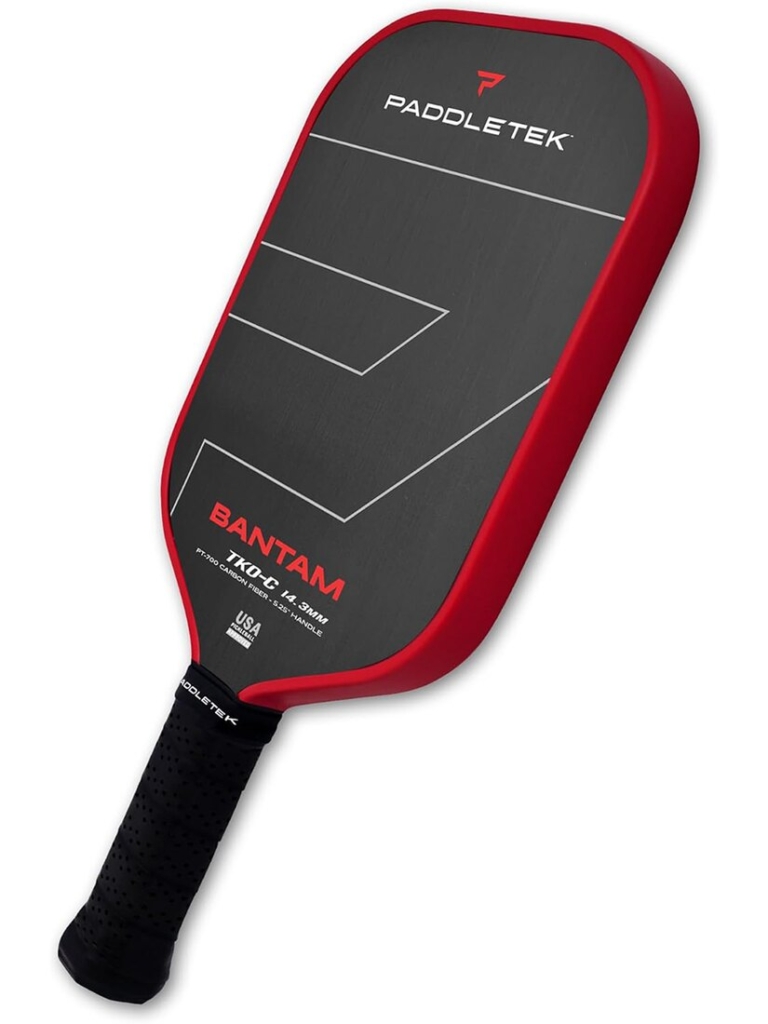
The TKO-C is the same 16.5 by 7.5 inch shape with a shorter 5.25-inch handle and a thicker 14.3mm core. Paddletek describes it as built for controllable power, maximum spin and extra reach, and it gets a nine out of ten in power, control and forgiveness, the most balanced rating of any Bantam in this guide.
If you want the TKO shape but find the CX’s long handle awkward, this is the paddle to look at, and the 14.3mm core gives a softer feel. It was also out of stock.
Bantam ESQ-C: the forgiving one
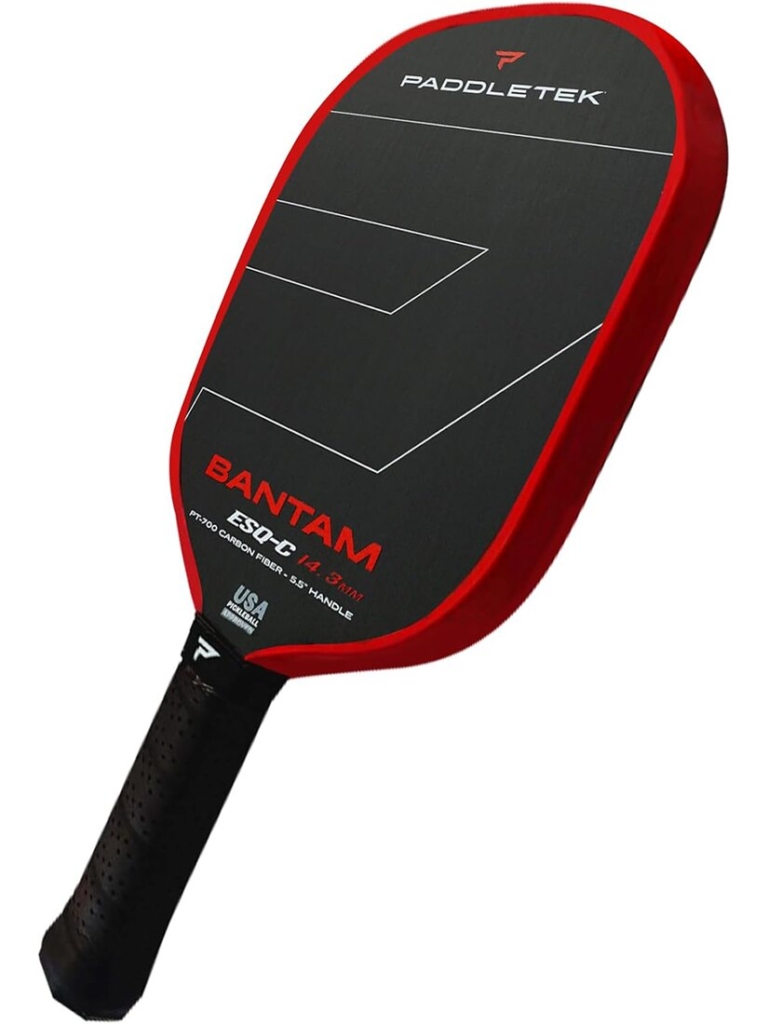
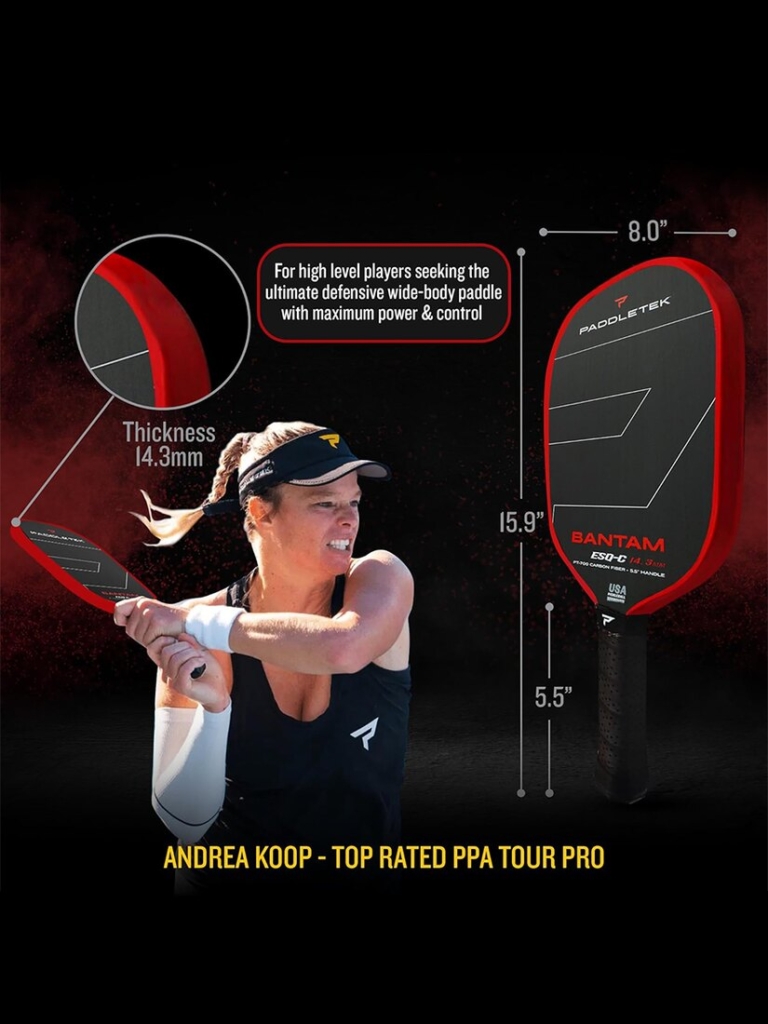
The ESQ-C, short for Esquire, was designed with pro Andrea Koop. It is the widest Bantam at 8 inches and 15.9 inches long, with a 5.5-inch handle and a 14.3mm core. Paddletek rates it 8 for power, 8 for control and 9 for forgiveness, and it is the lightest paddle here along with the ALW-C at 7.6 to 7.9 ounces.
Paddletek says the large, consistent sweet spot suits strategic net play and finesse, whether you are attacking or defending. If you spend your time at the kitchen and want a paddle that forgives your mishits, the ESQ-C is the one aimed at you.
Bantam ALW-C: the power and spin paddle
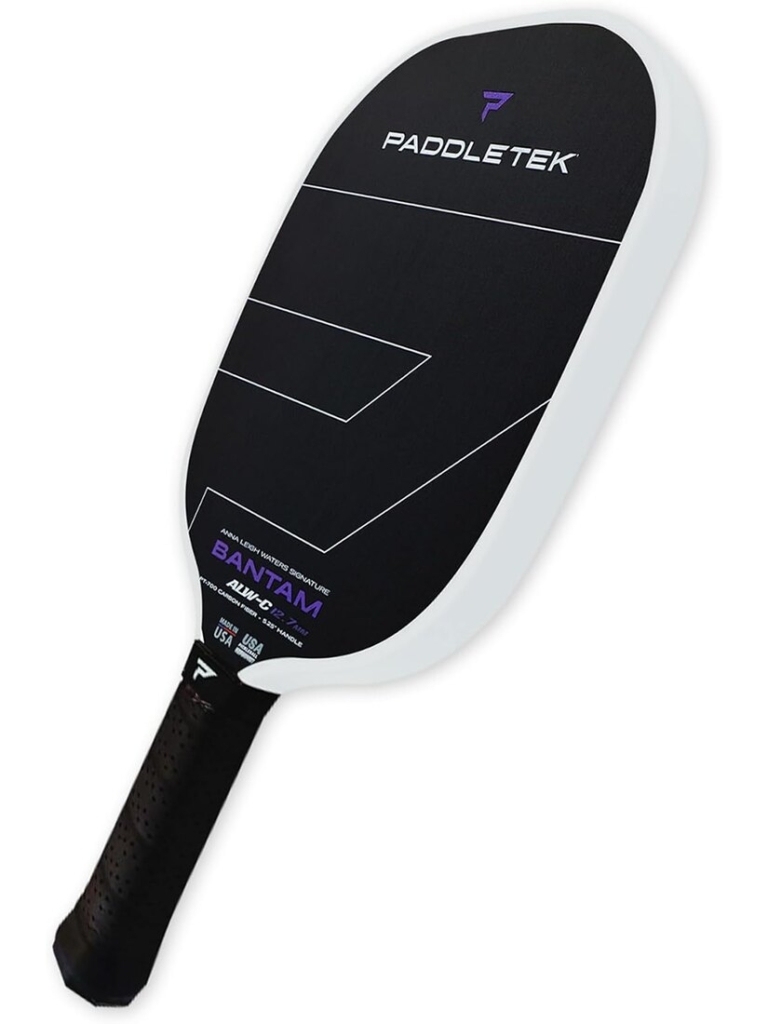
The ALW-C was co-designed with Anna Leigh Waters and is billed with the line Rip it, spin it, win it. It has the highest power rating in the group at 9.5, and the lowest control and forgiveness ratings at 7.5 each. It is a short, wide shape at 15.9 by 7.9 inches with a 5.25-inch handle and a 12.7mm core, and it weighs just 7.5 to 7.8 ounces, which gives it fast hands at the net.
That combination says it all: this is a paddle for aggressive players who want power and spin and who accept less forgiveness in return. It was in stock when I checked, and it is the best-reviewed of the group by sales visibility, but the ratings are the brand’s, so treat them as a guide and not as gospel.
Tempest Wave Pro-C: the cheaper control paddle
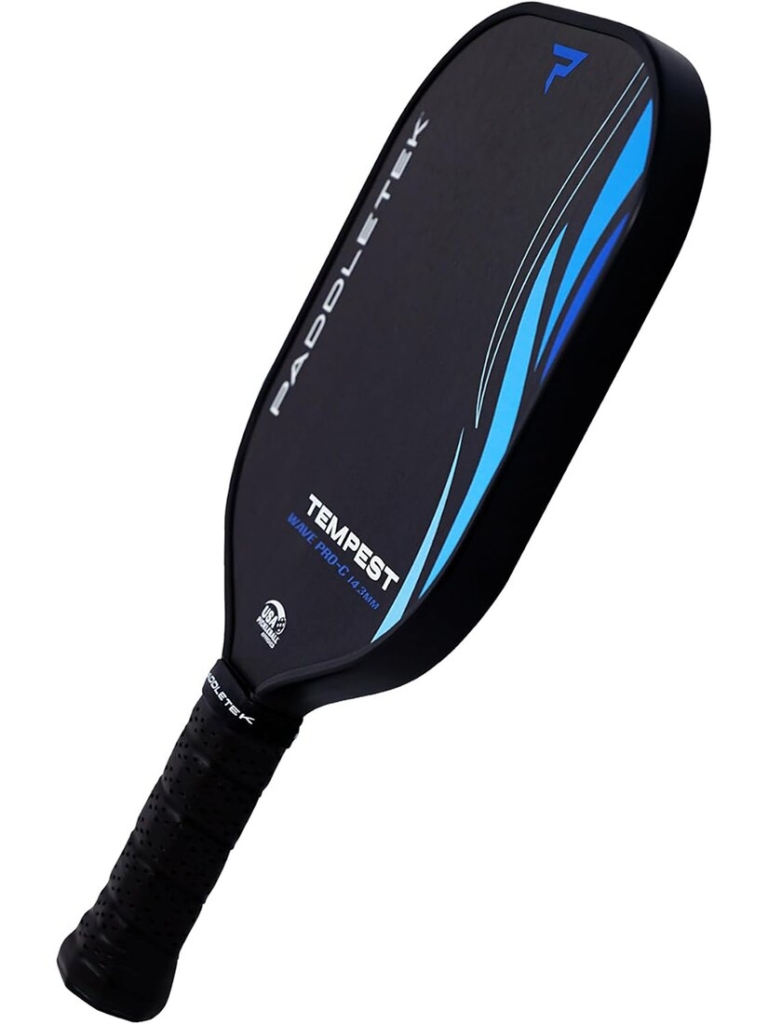
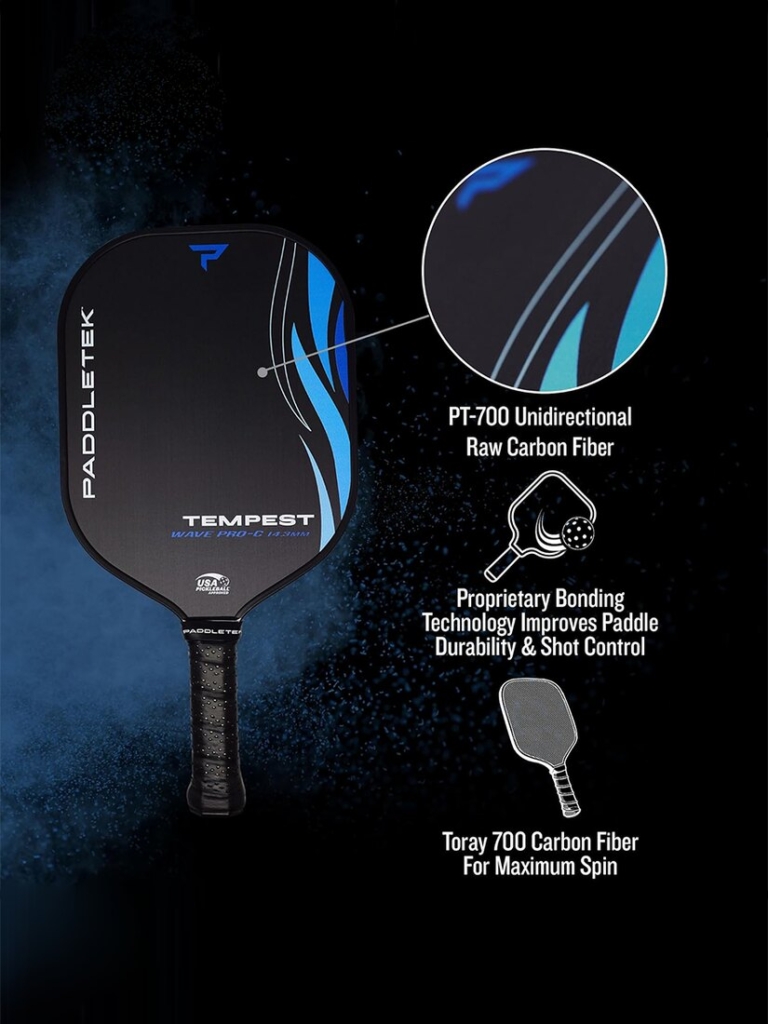
The Tempest Wave Pro-C 14.3 costs ₱12,200, which is ₱2,300 less than the Bantam paddles. Paddletek calls it the evolution of a best-seller, engineered for exceptional touch, control and spin. It has a 14.3mm Tempest PolyCore with Smart Response Technology and the same PT-700 raw carbon face.
The ratings tell the story: 8 for power, 9 for control and 9.5 for forgiveness, the highest forgiveness score in the group. The shape is 15.9 by 8 inches with a 5.25-inch handle, the same dimensions as the ESQ-C. It was showing as sold out, but if you can find it, it is the cheapest of the six and the one aimed at control players.
12.7mm or 14.3mm?
The Bantam range gives you a straight choice between two thicknesses. A 12.7mm core is thinner and generally livelier, which is why the high-power paddles like the GTO-C, TKO-CX and ALW-C use it. A 14.3mm core is thicker and softer, which is why the control-focused ESQ-C, TKO-C and Tempest Wave use it. Paddletek’s ratings match that pattern, with the thin-core paddles rating higher for power and the thick-core paddles rating higher for forgiveness.
If you are not sure, ask yourself whether you lose points by hitting out or by not finishing. If you hit out, choose the thicker core. If you cannot finish, choose the thinner one. My guide to Franklin paddles covers the same 14mm and 16mm question for another brand.
How to read the ratings
Paddletek’s power, control and forgiveness scores are the easiest way to compare the paddles, but they need a bit of care. They are the brand’s own ratings, not lab measurements, and they are relative: a nine for power on a Bantam means it is among the livelier paddles in Paddletek’s lineup, not that it will out-hit a paddle from another brand with the same score. Used within the Paddletek range, though, they are a decent guide.
Look for the shape of the three numbers, not the total. The ALW-C is 9.5 power with 7.5 control and 7.5 forgiveness, which is a high-risk, high-reward profile. The TKO-C is 9, 9 and 9, which is flat and balanced. The Tempest Wave is 8, 9 and 9.5, which is a control profile. Picking the shape that matches how you play is more useful than picking the highest total.
How they compare with JOOLA and CRBN
At ₱14,500, the Bantams sit between the ₱5,990 to ₱7,250 JOOLA paddles and the ₱17,690 CRBN TruFoam line. Unlike the CRBN paddles, which use a foam core, the Bantams use a polymer honeycomb core, which is the more traditional construction. If you want to see the other options, my guides to JOOLA paddles and CRBN TruFoam paddles cover both.
Mistakes to avoid
- Buying on the signature name. Pick the shape and the core, not the pro.
- Ignoring weight. A 7.5-ounce ALW-C and an 8.2-ounce TKO-CX feel very different in the hand.
- Choosing a long handle you will not use. If you play one-handed, a 5.75-inch handle can feel clumsy.
- Forgetting the grip size. A 4.25-inch circumference may be too big for small hands.
- Paying full price without checking stock. Several of these are sold out, so confirm before you commit.
Choosing by player type
- Aggressive, fast hands: ALW-C (₱14,500).
- Power with some forgiveness: GTO-C (₱14,500), in 12.7mm or 14.3mm.
- Reach and two-handed backhand: TKO-CX (₱14,500).
- Most balanced: TKO-C (₱14,500).
- Forgiveness at the net: ESQ-C (₱14,500).
- Control on a lower budget: Tempest Wave Pro-C (₱12,200).
Grips and sizing
Every Paddletek here lists a 4.25-inch grip circumference, which is average. You can pick a standard Ultra Cushion High Tack grip for a thicker, more cushioned handle, or a thin High Tack grip for a more connected feel. Handle length ranges from 5.25 inches on the TKO-C, ALW-C and Tempest to 5.75 inches on the TKO-CX. If you have small hands, a thinner grip and a shorter handle will be easier to control, and if you use two hands on your backhand, the longer handle helps.
An overgrip is a cheap way to tweak the size, and my guide to overgrips compares five of them.
Avoiding fakes and looking after the face
At ₱14,500, a Bantam is a target for counterfeiters, so buy from an official retailer or a Shopee Mall store. The raw carbon face needs the same care as any other: an eraser every few sessions and a cover or padded bag between games. My paddle care guide covers what to use.
My picks
- Best power: ALW-C (₱14,500).
- Best balance: TKO-C (₱14,500).
- Best forgiveness: ESQ-C (₱14,500).
- Best value: Tempest Wave Pro-C (₱12,200).
None of these is a beginner paddle. If you are starting out, the paddles in my beginner guide are a better place to begin, and a Bantam is something to move up to once your game is settled.