A pickleball paddle is not a set-and-forget piece of equipment. The face collects ball fibers, dust and sweat, the balance changes the way it swings, and a worn-out surface can cost you the spin you paid for. The good news is that looking after it costs very little. A few small accessories can keep a ₱5,000 paddle playing like new for much longer, and some of them cost less than a single game of open play.
This guide compares six paddle care products sold in the Philippines through PickleballPH: four ways to clean a paddle face and two ways to add weight and tune the balance. It is a research guide based on the product listings, not a hands-on test, and I have marked where a claim is the brand’s own.
Why paddle care matters
Every time the paddle hits the ball, tiny plastic fibers from the ball stick to the face. Over time they fill the small grooves in a textured or raw carbon surface, and the paddle looks dull and feels smoother than it should. That is a real problem for players who rely on spin, because the texture is what grips the ball. Brands like CRBN and Franklin say in their listings that buildup of this kind reduces spin and traction, and that cleaning restores it.
The other half of paddle care is balance. A paddle that feels a little head-light or a little slow can be changed with a few grams of weight in the right place. That is cheaper and more flexible than buying a new paddle, and it is a popular way for players to fit a paddle to their own swing.
Cleaning does not change what the paddle can do, it only brings back what the paddle already had. If the face is worn smooth, no eraser will bring back the grit, and at that point it is time to think about a new paddle. But for a paddle that is a few months old, regular cleaning is the difference between a surface that still bites the ball and one that has gone slick. The tuning products are the same: they do not make a paddle better, they make it fit you better.
| Product | Type | Listed price | What it does |
|---|---|---|---|
| PBPH Paddle Eraser | Eraser | ₱265 | Dry cleaning for raw carbon faces |
| FRANKLIN Paddle Magic | Eraser | ₱790 | Restores grit, includes clip-on lanyard |
| CRBN Paddle Eraser | Eraser | ₱890 | Removes ball fibers from carbon faces |
| RESET Paddle Cleaner | Spray | ₱1,250 | Alcohol-free, 4 oz with microfiber cloth |
| PBPH Paddle Weight Strips | Weight | ₱270 | 4 strips of 3 g |
| CRBN Lead Tape Strips | Weight | ₱890 | 12 strips of 3 g, USAP tournament approved |
Prices are the peso prices listed at PickleballPH at the time of writing. Stock changes, so check the current listing.
PBPH Paddle Eraser: the cheapest fix
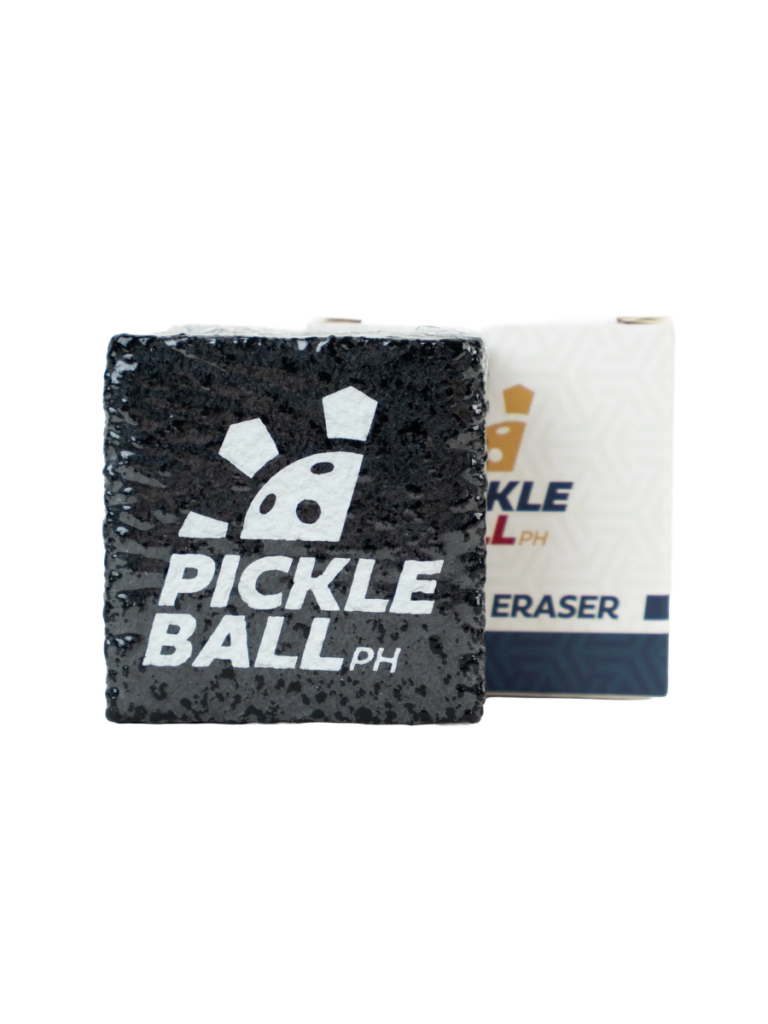
At ₱265, the PBPH Paddle Eraser is the cheapest way to clean a paddle here. It is made for raw carbon fiber faces and removes ball fibers, dust, dirt and light surface residue without any liquid or chemical. The listing says it also helps minimize visible ball marks and light scuffs and keeps the textured surface consistent. It is compact enough to live in your bag.
If you use a raw carbon fiber paddle and you do not clean it, this is the easiest place to start. It is dry, quick and costs less than most pickleballs.
FRANKLIN Paddle Magic: the clip-on option
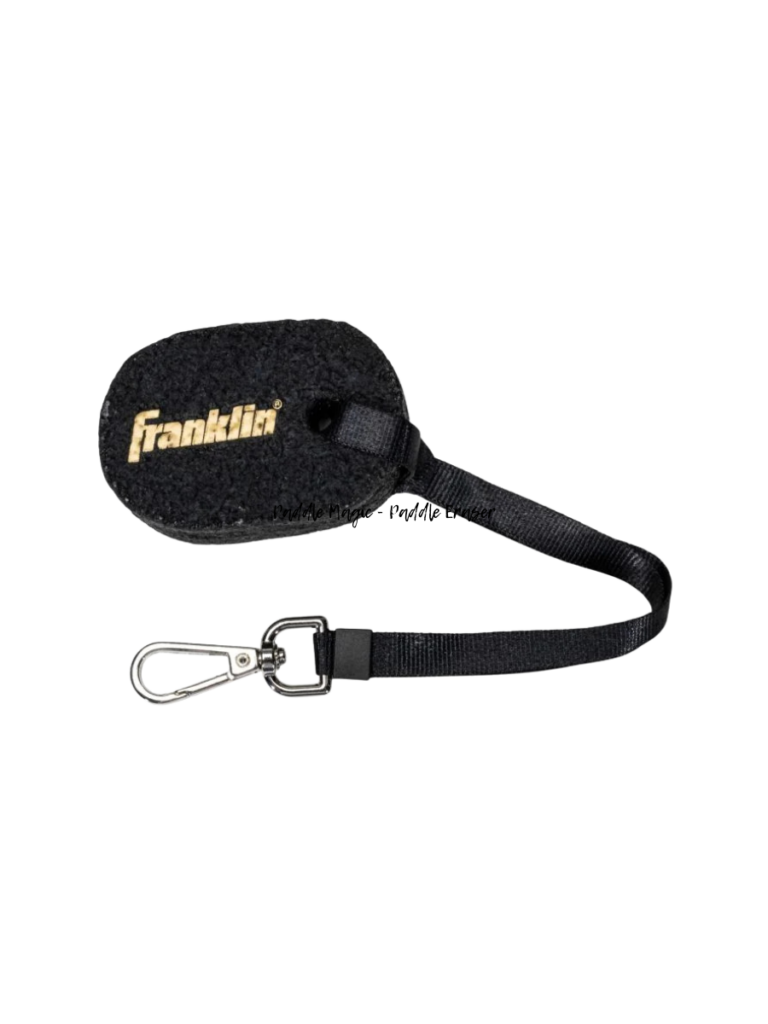
The FRANKLIN Paddle Magic costs ₱790 and is built for carbon fiber paddles. It removes ball residue, dirt and debris, and Franklin says a few swipes restore the surface grit to improve spin, traction and control. The detail that sets it apart is the clip-on lanyard, so you can attach it to your bag and always have it on hand.
It is more than three times the price of the PBPH eraser, so the clip is what you are paying for. If you lose small accessories at the bottom of your bag, that is a useful feature.
CRBN Paddle Eraser: made for carbon faces
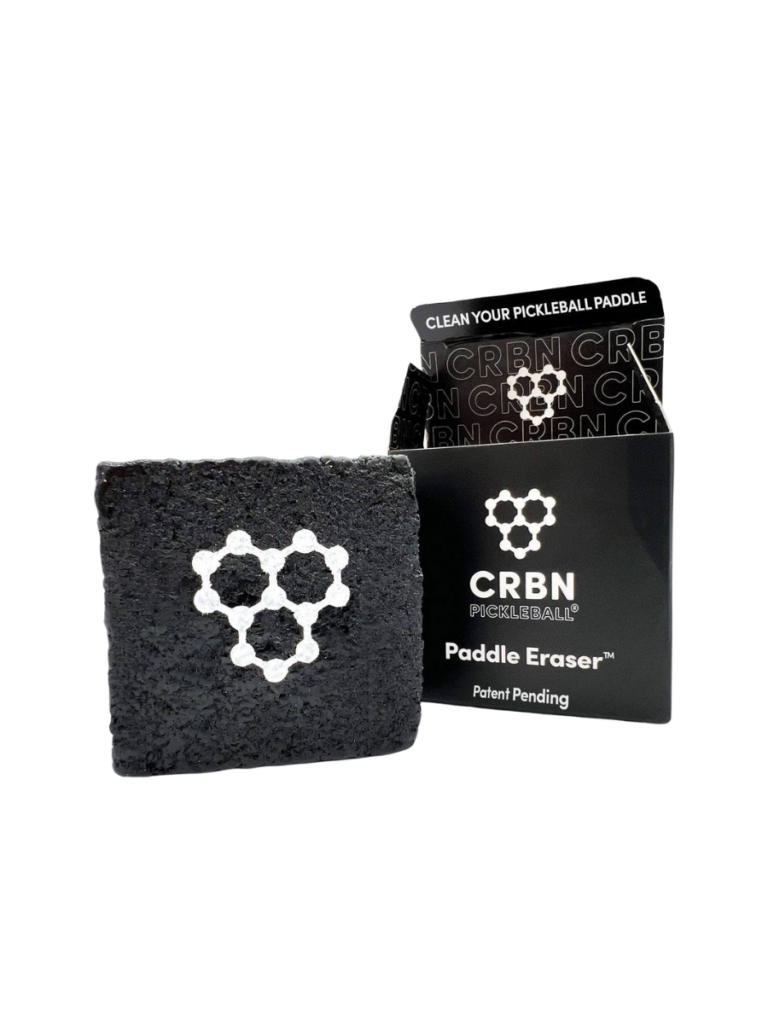
The CRBN Paddle Eraser, at ₱890, is described by CRBN as the first of its kind, and it is made to remove ball fibers from any carbon-faced paddle. The listing says it is also safe on other raw peel-ply surfaces such as Kevlar. You rub it up and down the face, and a few swipes usually do the job, though a heavily soiled paddle needs more effort.
One warning from CRBN is worth repeating: do not use it on a paddle that has aftermarket coatings, sprays or paint. If you have treated your paddle face, check before you use any eraser on it.
RESET Paddle Cleaner: the liquid option
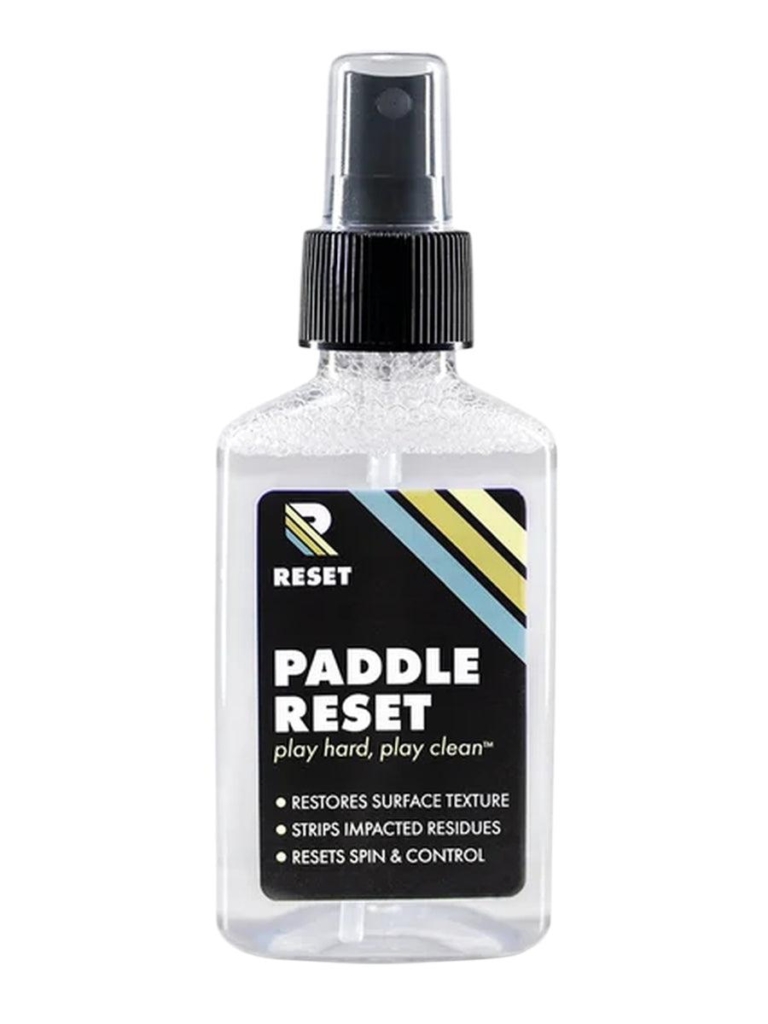
The RESET Paddle Cleaner, at ₱1,250, is the only spray on this list. It is an alcohol-free, non-toxic formula designed for carbon fiber, fiberglass, graphite and composite faces, which makes it the most versatile of the four. You spray it on the face, wait 10 to 15 seconds and wipe it off with the included washable microfiber cloth. The bottle is a compact 4 oz and designed to be leak-resistant.
It is the one to buy if you play a paddle that is not raw carbon, because the erasers are specifically built for raw carbon surfaces. It also handles sweat and court dust, which an eraser does not do as well.
Weight strips and lead tape: tuning the balance
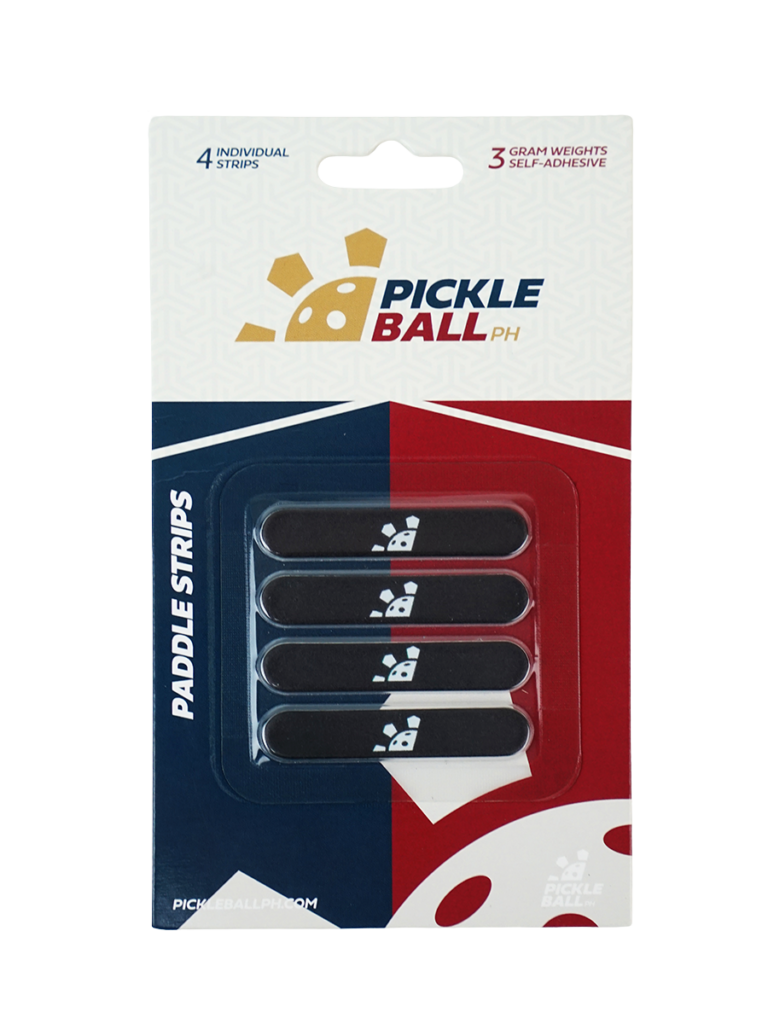
Adding weight to a paddle is one of the cheapest ways to change how it plays. The PBPH Premium Paddle Weight Strips cost ₱270 for a set of four 3-gram strips with a self-adhesive backing. The CRBN Lead Tape Strips cost ₱890 for 12 pre-cut 3-gram strips, each 5 by 1 cm, with 3M adhesive, and CRBN says the set is USAP tournament approved.
PBPH’s listing includes a placement guide. Weight at the top of the paddle increases power but slows hand speed. Weight in the middle adds stability and widens the effective sweet spot. Weight near the throat improves maneuverability and hand speed. That matches the general idea of how weight placement works, and it gives you somewhere to start.
The PBPH set is the cheaper way to try it. The CRBN set gives you three times as many strips and the tournament approval, which matters if you play sanctioned events.
How to use weight strips
- Start with one strip. Three grams sounds small, but you will feel it.
- Place it in one spot and play a few sessions before changing it.
- Add strips on both sides of the paddle at the same position to keep the balance even.
- Write down what you tried, so you can go back if it feels worse.
- Do not cover the logos or edge guard if you plan to play sanctioned events, and check the rules first.
Eraser or spray?
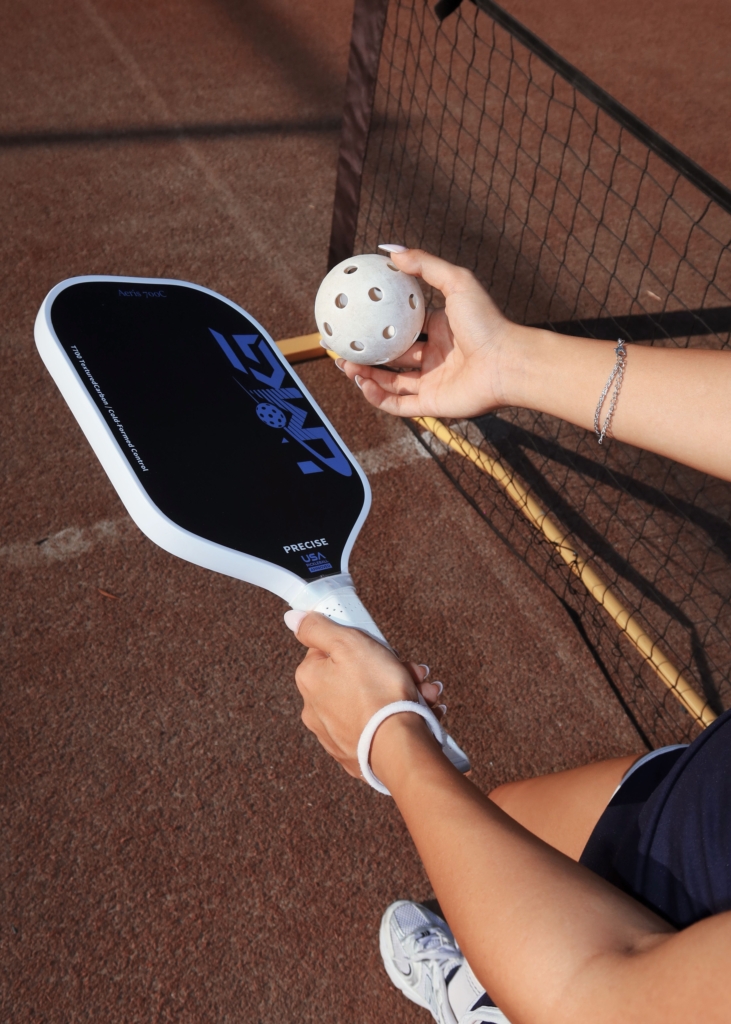
Both do the same basic job, but they work differently and suit different paddles. An eraser is a dry, rubber block that you rub across the face. It is quick, cheap, small and good at lifting ball fibers out of the grooves of a raw carbon surface. It is not the best at removing sweat film or oily residue, and the brands that make them say they are for raw carbon or peel-ply faces.
A spray with a cloth is slower, but it covers more ground. It cleans the film left by sweat and court dust, and it works on fiberglass, graphite and composite faces as well as carbon. The RESET cleaner is the only one here that lists those surfaces. Many players carry both: an eraser for a quick fix during a session and a spray for a proper clean at home.
A care kit for under ₱1,500
You do not need to buy everything. A sensible starter kit, using the prices from this guide, looks like this:
- PBPH Paddle Eraser: ₱265 for regular cleaning.
- PBPH Weight Strips: ₱270 to try tuning the balance.
- An overgrip pack: the PBPH Tacky pack is ₱185 for three.
- A towel: the PBPH microfiber towel is ₱280.
That adds up to ₱1,000, which is less than a single replacement grip from some of the premium brands, and it covers cleaning, balance, grip and sweat. If you want to upgrade later, the RESET spray and the CRBN lead tape are the natural next steps.
What not to use on your paddle
It is tempting to grab whatever cleaner is under the sink, but that is a bad idea. Harsh household chemicals, strong solvents and abrasive scrubbers can strip the surface texture or damage the edge guard and the glue under the face. Stick to products made for paddles, or plain water and a soft cloth if you have nothing else. Do not soak the paddle, and do not leave it to dry in direct sun or on a car dashboard.
Check the manufacturer care instructions before you clean anything new. CRBN, for example, warns against using its eraser on paddles with aftermarket coatings, sprays or paint, and the same logic applies to any treated face.
Mistakes to avoid
- Cleaning too hard. A few swipes are enough, and pressing hard can wear the surface.
- Using an eraser on the wrong surface. Erasers are for raw carbon faces. Check the listing first.
- Adding too much weight at once. Change one thing at a time, so you know what helped.
- Covering the edge guard with weight. It can cause damage and may break the rules at sanctioned events.
- Skipping storage care. Heat does more damage than any amount of dust.
How often to clean your paddle
There is no strict rule, but a good routine is to wipe it down after every few sessions, or whenever the face looks dull or feels smoother than usual. If you play often, a quick pass with an eraser before each session takes seconds. If you play occasionally, once every couple of weeks is enough. A dirty face is not dangerous, but you will notice the spin and the touch coming back after a clean.
Store your paddle in a cover or in a bag compartment out of direct sun. Heat can weaken the glue holding the core to the face, and it is one of the main reasons paddles wear out early.
My picks
- Best budget cleaner: PBPH Paddle Eraser (₱265).
- Best for bag-clippers: FRANKLIN Paddle Magic (₱790).
- Best for carbon fiber: CRBN Paddle Eraser (₱890).
- Best for non-raw faces and sweat: RESET Paddle Cleaner (₱1,250).
- Best budget weight: PBPH Weight Strips (₱270).
- Best for tournaments: CRBN Lead Tape (₱890).
If you are also thinking about the rest of your kit, my guides to overgrips and bags cover the other items that protect your paddle, and my Enflexy Noir review covers a raw-faced paddle that benefits from regular cleaning.