I picked up my first paddle at a public court in Makati three years ago, borrowed from a friend tired of playing singles against a wall. Within a year I owned eleven paddles, and today my garage holds a small museum of fiberglass, foam, and raw carbon fiber blades I rotate through for testing. Every paddle in this comparison has spent real time in my hands, on courts ranging from fast indoor gyms to sun baked outdoor slabs in the high eighties Fahrenheit.
Picking a paddle in 2026 is harder than it used to be, not because good options are rare, but because too many of them wear nearly identical marketing claims. Every brand promises more spin, more pop, and a bigger sweet spot, and most are telling at least a partial truth. The four paddles below, from JOOLA, Selkirk, CRBN, and Vatic Pro, represent four genuinely different ways of solving the same problem, and matching one to your game matters more than chasing whichever paddle your favorite pro happens to hold.
I tested each one across dozens of games with players at different skill levels before writing a word here. What follows is the honest version of how they compare.
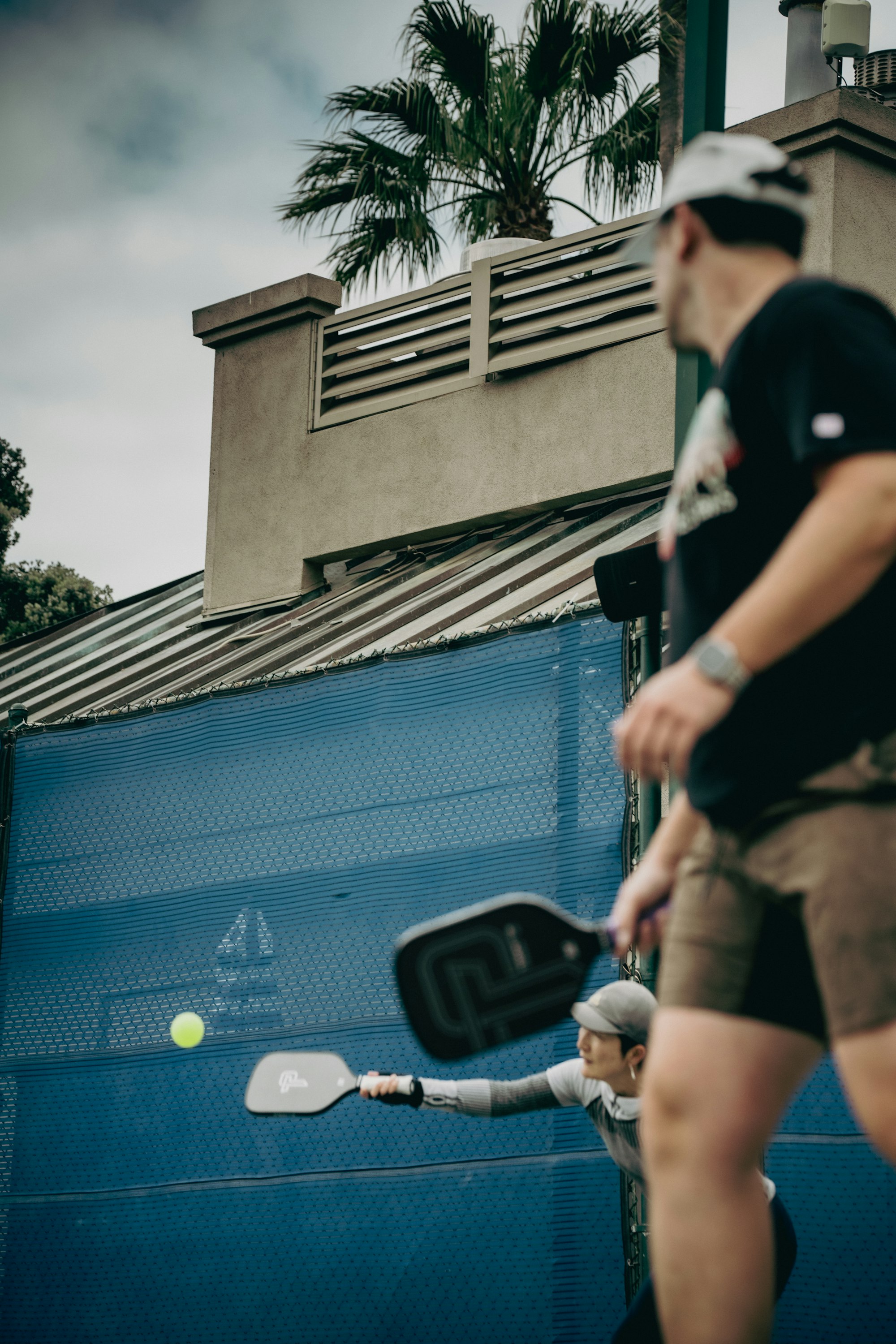
Pickleball has exploded across outdoor courts everywhere, which is exactly why paddle choice matters more than ever. Photo: Venti Views / Unsplash.
What Makes a Good Pickleball Paddle in 2026
A good paddle starts with weight and balance, since both determine how your arm feels after two hours on court. Most players do best in the 7.5 to 8.3 ounce range, with lighter paddles rewarding fast hands at the net and heavier paddles adding free power on drives. Core thickness matters just as much: thinner 14mm cores feel lively and fast off the face, while thicker 16mm and 19mm cores absorb more energy and give a longer dwell time for shaping shots. These numbers don’t work in isolation, which is why the table below treats weight, core, and face material as one connected decision.
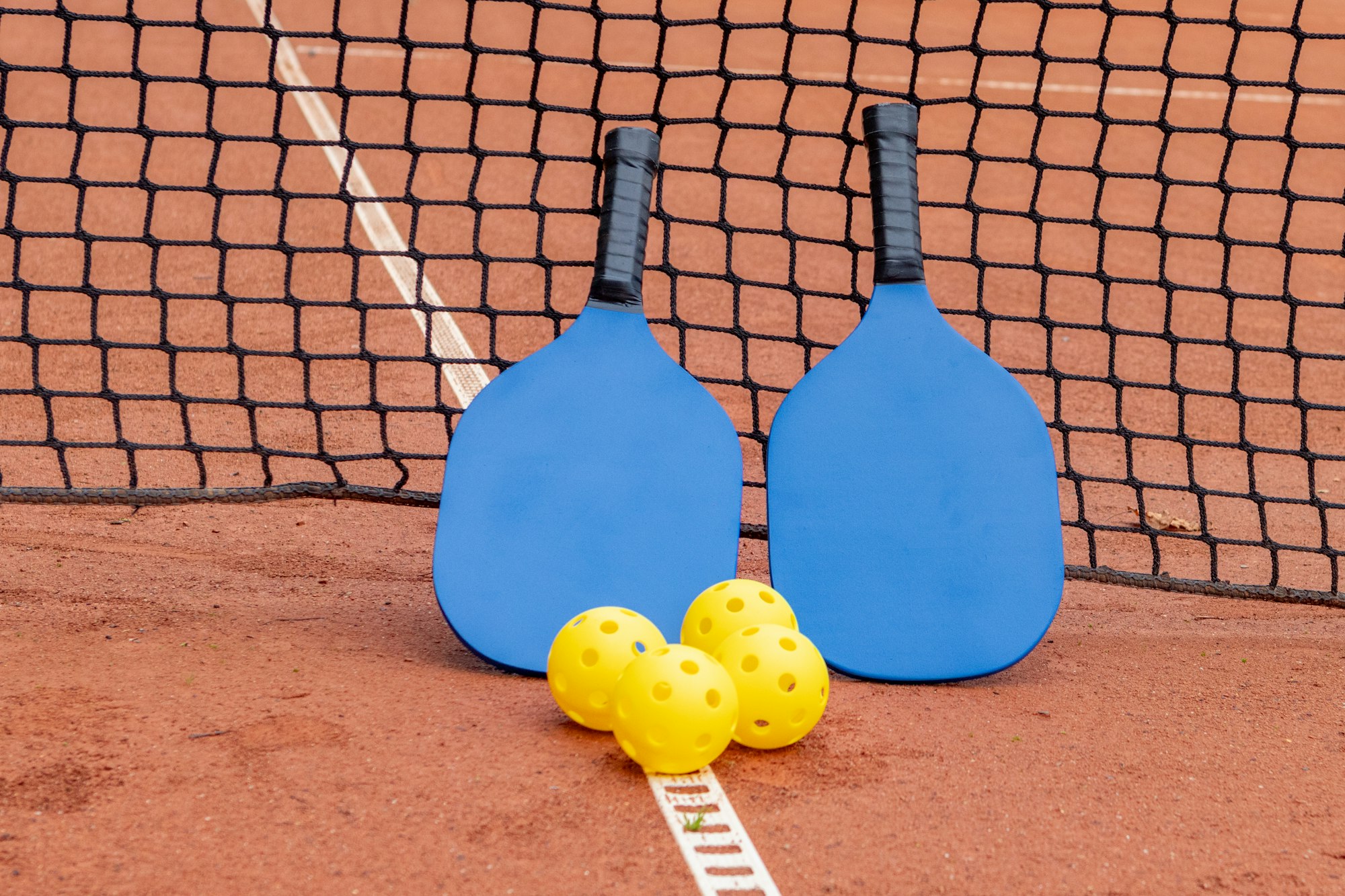
Weight, core thickness, and face material work together, not in isolation. Photo: Alex Saks / Unsplash.
Face material is the other half of the equation. Raw, unsanded carbon fiber grips the ball aggressively and produces the most spin, while surface treatments like InfiniGrit combine that grip with better durability over time. Foam cores, the newest development among these four paddles, trade a little top end power for longer dwell time, which makes them easier to control at the kitchen line. Price correlates loosely with performance here, but the gap between a $100 paddle and a $300 paddle is smaller than the tag suggests once you’re past the beginner stage.
The comparison table below keeps the same order used throughout this article, so you can jump straight to any paddle’s full breakdown.
| Paddle | Price | Weight | Core | Face Material | Best For |
|---|---|---|---|---|---|
| JOOLA Perseus Pro V 16mm | $299.95 | 7.9–8.3 oz | 16mm | Textured carbon fiber | Power and spin for advanced players |
| Selkirk LUXX Control Air InfiniGrit Epic | $199.99 | 7.9–8.3 oz | 19mm | Florek carbon fiber with InfiniGrit | Players who prioritize control but still want pop |
| CRBN TruFoam Genesis 1 | $279.99 | 7.8–8.1 oz | 14mm (foam) | T700 raw carbon fiber | Feel and dwell time at the kitchen line |
| Vatic Pro Prism Flash 16mm | $99.99 | 7.9–8.2 oz | 16mm | Raw T700 carbon fiber | Budget minded players who still want carbon performance |
JOOLA Ben Johns Perseus Pro V: Built for Power and Spin
The JOOLA Ben Johns Perseus Pro V 16mm is the paddle that put JOOLA at the top of the pro tour, and it’s still the one I reach for when testing how hard I can hit without losing the ball long. It weighs between 7.9 and 8.3 ounces, carries a 16mm Honeycomb Propulsion core, and wraps that core in a textured carbon fiber face built with JOOLA’s thermoformed KineticFrame construction. The frame flexes slightly on contact to store and release energy, the main reason this paddle hits harder than its weight suggests. At $299.95, it sits at the top of this comparison on price, and makes no apology for that.
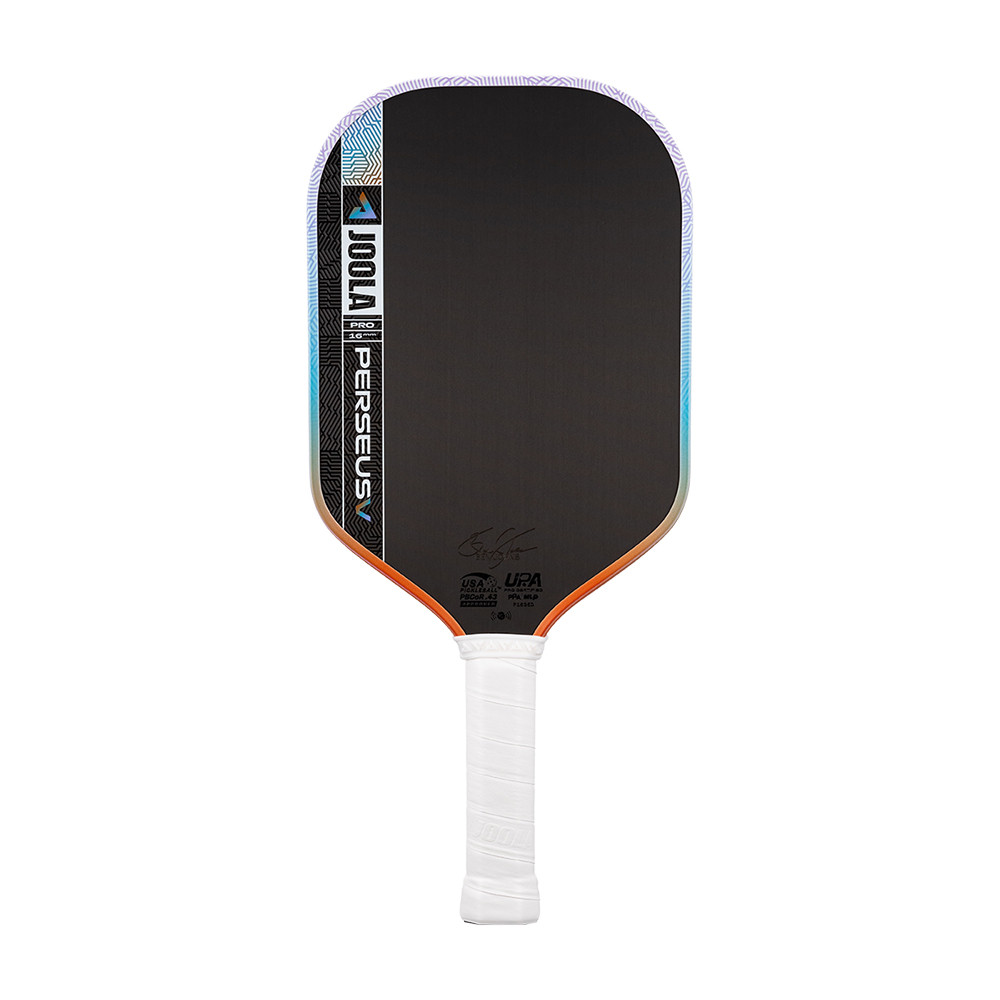
The JOOLA Ben Johns Perseus Pro V 16mm. Photo: JOOLA.
What surprised me most wasn’t the power, which I expected, but how much spin the textured face generates on a clean topspin roll. The 5.5 inch handle and 4⅛ inch grip circumference give smaller hands room to generate racket head speed without the paddle feeling unwieldy. It rewards players who already have sound mechanics, since the trade off for all that pop is a sweet spot that punishes mishits more than the control paddles here.
The textured carbon face grabs hard, and with the dwell behind it you can generate serious topspin.
Source: Pickleheads
If your game already leans aggressive and you’re comfortable absorbing a steep price tag for tournament level performance, the Perseus Pro V earns its reputation. It is not the paddle I’d hand a player who is still working on timing.
Selkirk LUXX Control Air InfiniGrit Epic: Built for Control
The Selkirk LUXX Control Air InfiniGrit Epic takes the opposite approach from the JOOLA above, prioritizing touch and consistency over raw power. It carries a thick 19mm X7 Thickset Honeycomb core, the thickest in this comparison, wrapped in a Florek carbon fiber face treated with Selkirk’s InfiniGrit surface technology. That deep core and gritted surface are built to extend spin life, with Selkirk claiming roughly three times the spin retention of an untreated raw carbon face. At $199.99, it sits well under its $279.99 list price, making it one of the better value plays among premium control paddles.
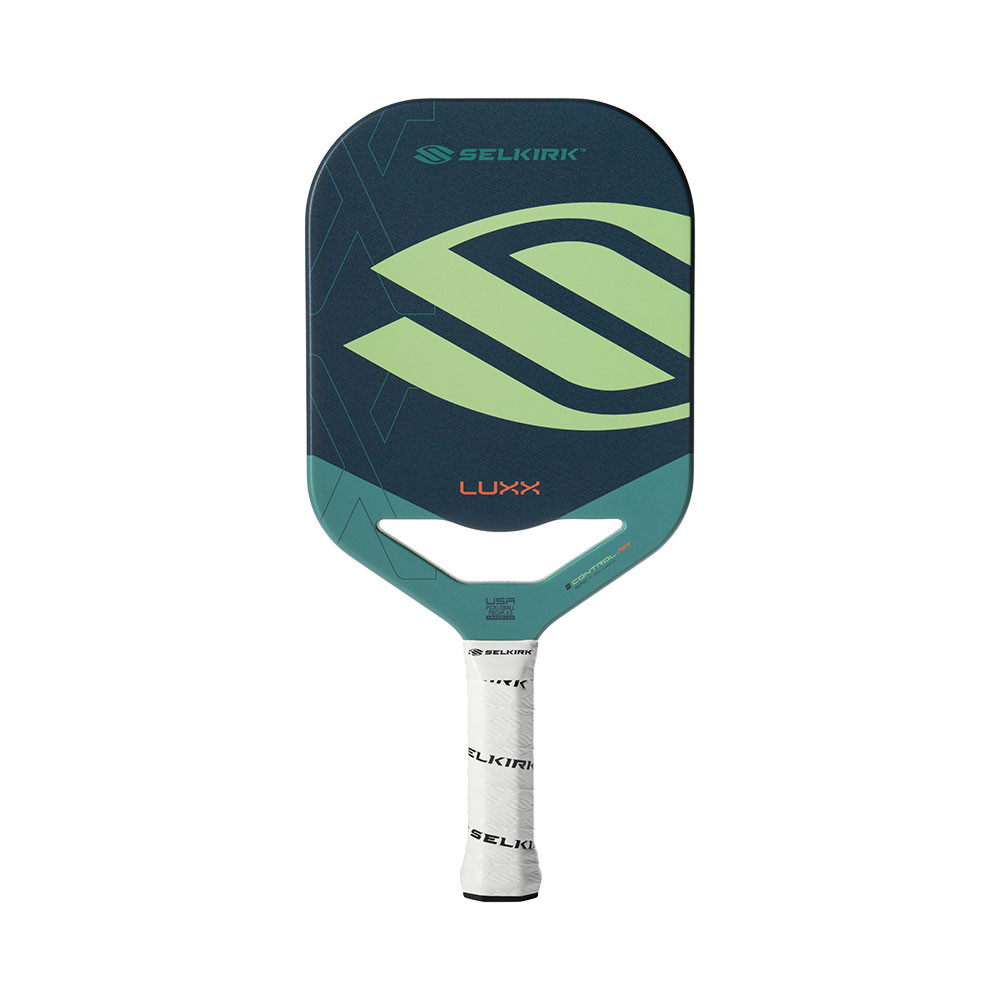
The Selkirk LUXX Control Air InfiniGrit Epic. Photo: Pickleball Central.
On court, the thicker core is immediately noticeable in how quiet and controlled contact feels, even on balls that would skid off a thinner paddle. The 9.5 inch balance point keeps the head from feeling top heavy despite the added thickness, and the 4.25 inch grip circumference suited my hand better than JOOLA’s narrower grip during long dinking exchanges. Resets and third shot drops are where this paddle does its best work, since the dwell time gives an extra beat to adjust your angle mid swing.
Players coming from aggressive, drive heavy games may need a session or two to adjust to how much the core absorbs pace. Once that adjustment happens, the control here is hard to go back from.
CRBN TruFoam Genesis 1: Built for Feel
CRBN’s TruFoam Genesis 1 represents the newest shift in paddle construction, replacing the usual foam injected polypropylene honeycomb with a 100% foam core. That core measures a relatively thin 14mm, and the paddle weighs between 7.8 and 8.1 ounces with a T700 raw carbon fiber and fiberglass hitting surface. The elongated shape gives it the longest handle here at 5.5 inches and the narrowest body at 7.35 inches, suiting players who want extra reach on two handed backhands. Pricing lands at $279.99, alongside the JOOLA as one of the pricier options here.
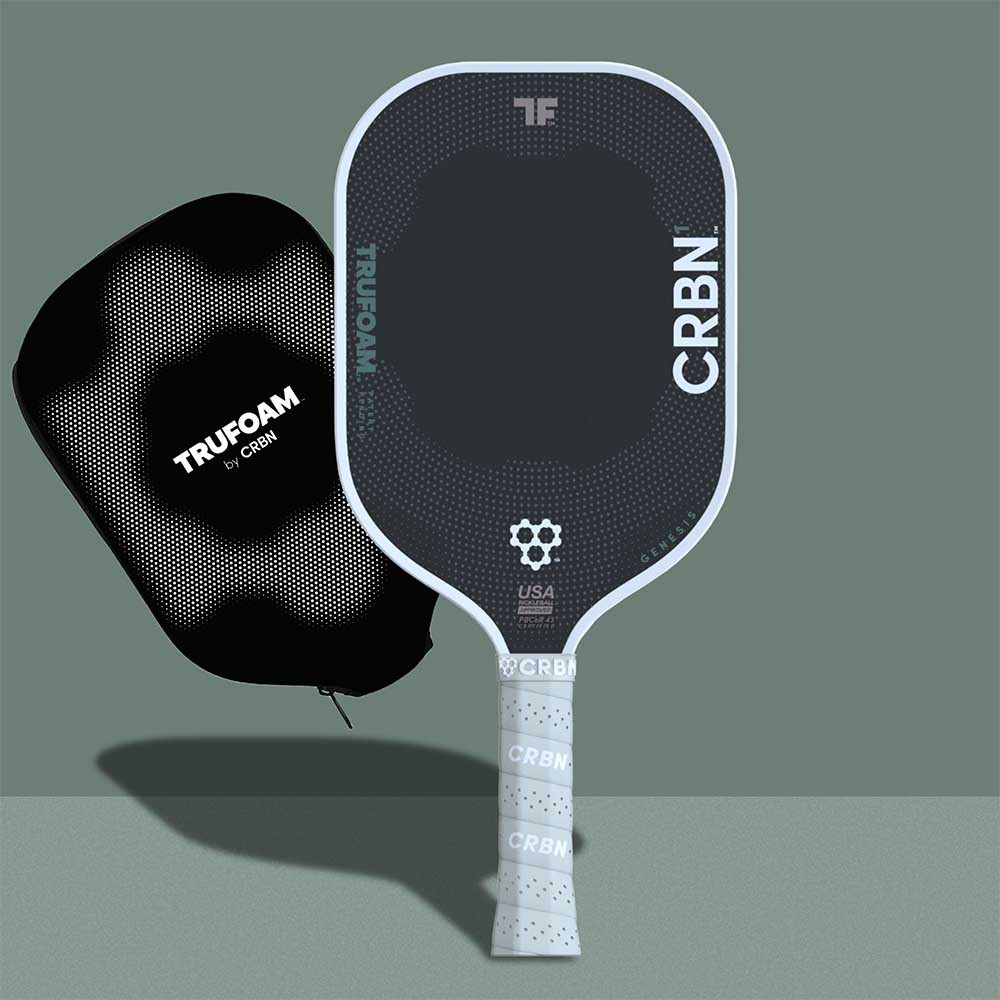
The CRBN TruFoam Genesis 1, built around a 100% foam core. Photo: Pickleball Central.
What the foam core changes is dwell time, the brief moment the ball stays in contact with the face before leaving it. Longer dwell means more opportunity to guide the ball rather than redirect it, showing up most clearly on topspin rolls and soft resets at the net. CRBN also markets this construction as a fix for the core crushing that plagued earlier foam and polymer paddles, and after months of regular use mine shows no dead spots.
The foam core softens this paddle compared to many elongated power paddles, giving you plenty of control.
Source: Pickleheads
This is the paddle I now recommend most often to players who already have decent hands and want to sharpen their net game. It is not the first choice for someone who simply wants to hit harder.
Vatic Pro Prism Flash: Built for Value
Vatic Pro built its reputation on a simple pitch: competition grade paddles without the price tag that usually comes with a recognizable sponsor name, and the Prism Flash 16mm is the clearest example of that pitch working. It weighs 7.9 to 8.2 ounces, uses a 16mm polymer honeycomb core wrapped in a raw T700 carbon fiber face, and ships with an anti abrasion TPU edge guard often reserved for pricier paddles. At right around $99.99, it costs roughly a third of the JOOLA and CRBN paddles above while sharing the same carbon fiber face material. The hybrid shape, with slightly rounded edges, is built to enlarge the sweet spot for players still developing consistent contact.
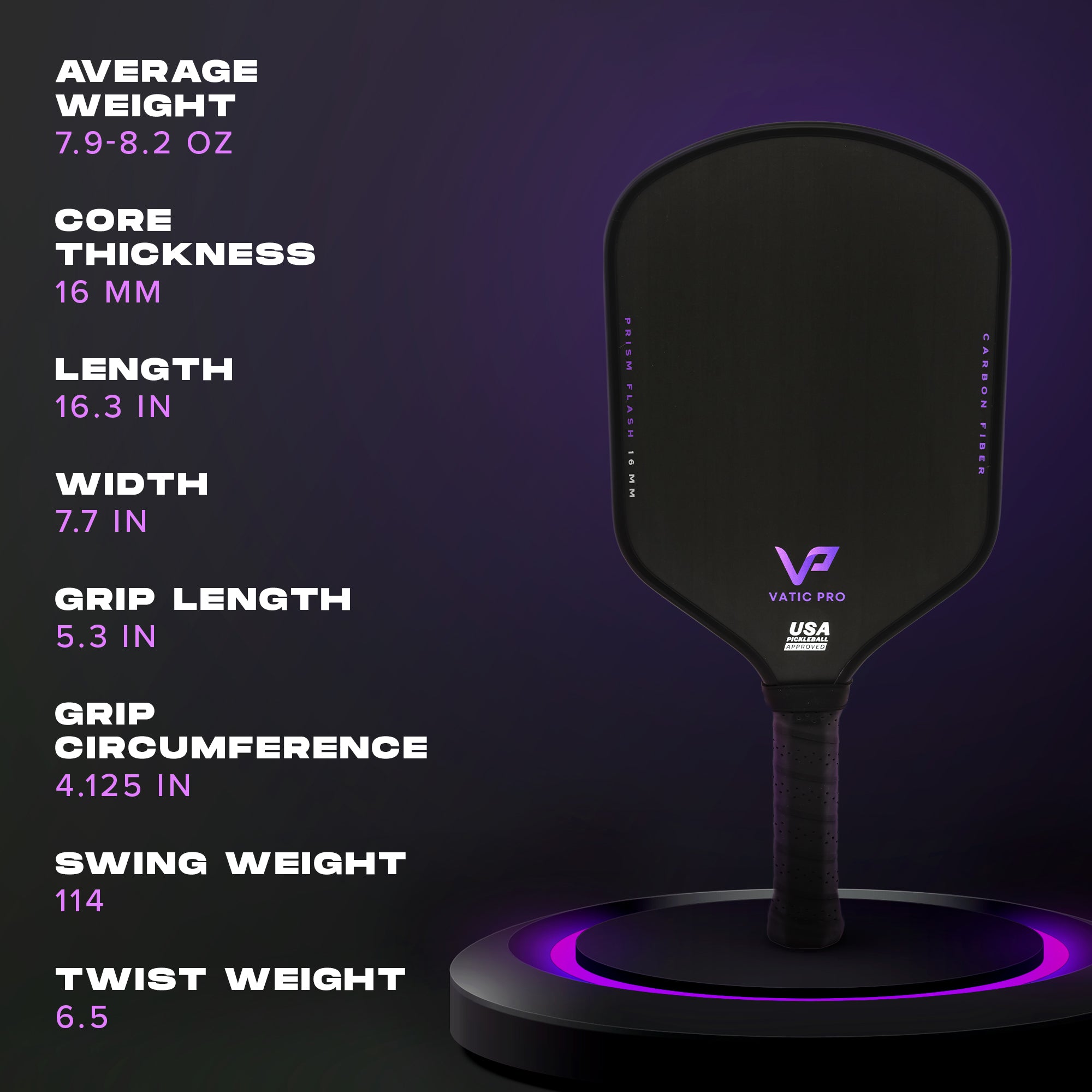
The Vatic Pro Prism Flash 16mm. Photo: Vatic Pro.
In side by side hitting, the Prism Flash doesn’t quite match the top end spin of the Selkirk or the dwell time of the CRBN, and a careful ear can tell the difference in sound off the face. What it delivers is a genuinely competitive baseline of power and control at a price that lets a budget minded player try raw carbon fiber construction without a $300 commitment. The 16⅓ inch length and 7⅞ inch width stay close to tour standard dimensions, so it never feels like a compromise paddle in reach or coverage.
For players outfitting a whole household or trying carbon fiber for the first time, this is the paddle I’d point them toward. It punches well above its price, even if it doesn’t quite catch the three paddles above it.
Practical Tips for Choosing Your Next Paddle
Demo before you buy whenever possible, since the difference between a 14mm and a 19mm core is something you feel within the first few swings, not something you judge from a spec sheet. Many local pickleball shops and clubs keep demo paddles on hand for this reason, and some manufacturers run paddle trucks at larger tournaments. If a demo isn’t available, buying from a retailer with a reasonable return window is the next best option.
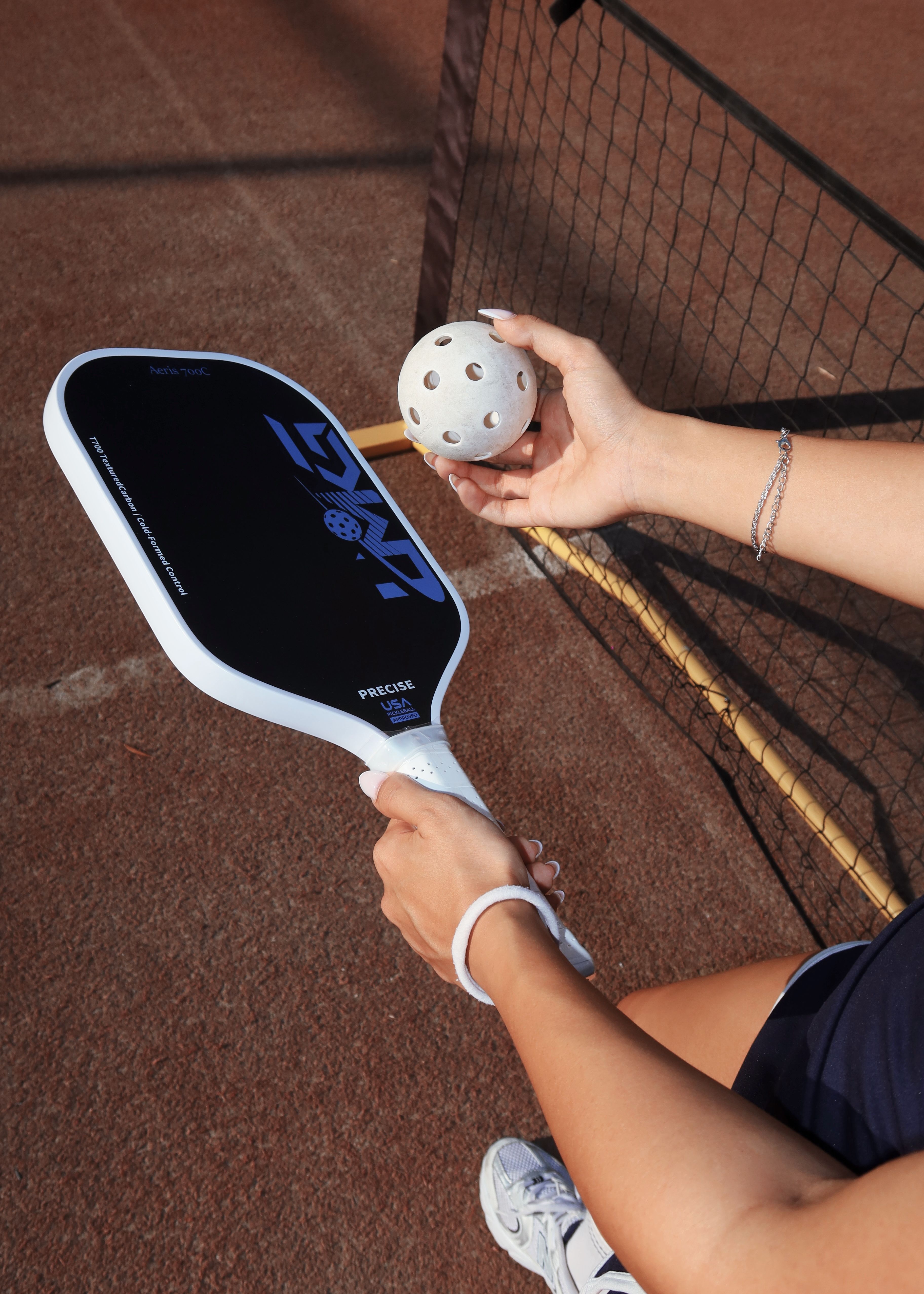
Grip size and feel matter as much as the spec sheet once you’re actually on court. Photo: Gunel Huseynova / Pexels.
Match the paddle to your dominant shot pattern rather than to what’s currently popular. Players who win points by overpowering opponents from the baseline tend to do better with thinner, lighter paddles like the JOOLA above, while players who win at the net through patience and placement usually prefer the thicker cores in the Selkirk or CRBN. Grip size deserves the same attention as weight, since a grip that’s too large or small changes your swing mechanics in ways hard to diagnose later.
Replace your overgrip every few weeks of regular play, since a worn grip changes how a paddle feels more than most players expect.
Frequently Asked Questions
What’s the difference between a 14mm and a 16mm paddle core?
Thinner cores like 14mm feel faster and more responsive off the face, with a louder pop on contact, suiting players who like quick exchanges at the net. Thicker cores, including the 16mm and 19mm options here, absorb more of the ball’s energy and give a longer dwell time, translating into more control over spin and placement. Neither thickness is objectively better, and the right choice depends on whether your game leans toward power or touch.
Is a more expensive paddle always a better paddle?
Not necessarily, and the Vatic Pro Prism Flash here is a good example of why. Price often reflects brand reputation, sponsorship deals, and surface treatments like InfiniGrit as much as raw performance, and the gap between a $100 paddle and a $300 paddle is smaller than most new players assume. Serious tournament players chasing the last few percent of spin or power may still find the premium paddles worth it.
How long does a pickleball paddle actually last?
Most paddles hold their performance for six months to a year of regular play before the face starts losing grit and the core shows dead spots, though this varies with how often you play and how hard you hit. Raw carbon fiber faces wear faster than treated surfaces like InfiniGrit, which is designed to extend that window. Storing paddles out of direct heat and humidity, which matters more than people expect in a tropical climate, also helps preserve the face and core.
Should beginners buy a thicker or thinner core paddle?
Most coaches recommend starting with a mid range core between 14mm and 16mm, since it offers a reasonable balance of forgiveness and feedback while you’re still developing consistent contact. A very thin core can be unforgiving on mishits, while a very thick core can make it harder to feel what your paddle is doing to the ball. Once you have a clearer sense of your own playing style, moving toward a more specialized core thickness makes more sense.
Does paddle weight matter more than core thickness?
Both matter, but they affect different things. Weight influences how tired your arm gets over a long session and how much free power you get on drives, while core thickness influences dwell time and control over spin and placement. Most players settle into the 7.5 to 8.3 ounce range used by every paddle here, then fine tune their choice based on core thickness and face material.
Final Thoughts
None of these four paddles is objectively the best pickleball paddle on the market, because that paddle doesn’t exist independent of the player holding it. The JOOLA Perseus Pro V rewards aggression, the Selkirk LUXX Control Air InfiniGrit Epic rewards patience, the CRBN TruFoam Genesis rewards touch at the net, and the Vatic Pro Prism Flash rewards anyone who wants real carbon fiber performance without a premium price tag. The honest answer to “which paddle should I buy” is almost always “it depends on how you already play,” less satisfying than a single recommendation but far more useful.
If you’re still unsure, start by being honest about whether you win points through power or placement, then let that answer point you toward the cores covered above. Testing multiple paddles before committing, even informally with friends at a local court, will tell you more in twenty minutes than any review, including this one.
The right paddle is the one that fits how you actually play, not the one with the biggest name. Photo: Rodrigo Ortega / Pexels.
If you found this useful, Dink It Ball has more hands on paddle breakdowns and gear reviews worth a look before your next purchase.